
How to Build a Kitchen That Still Looks New After 10 Years
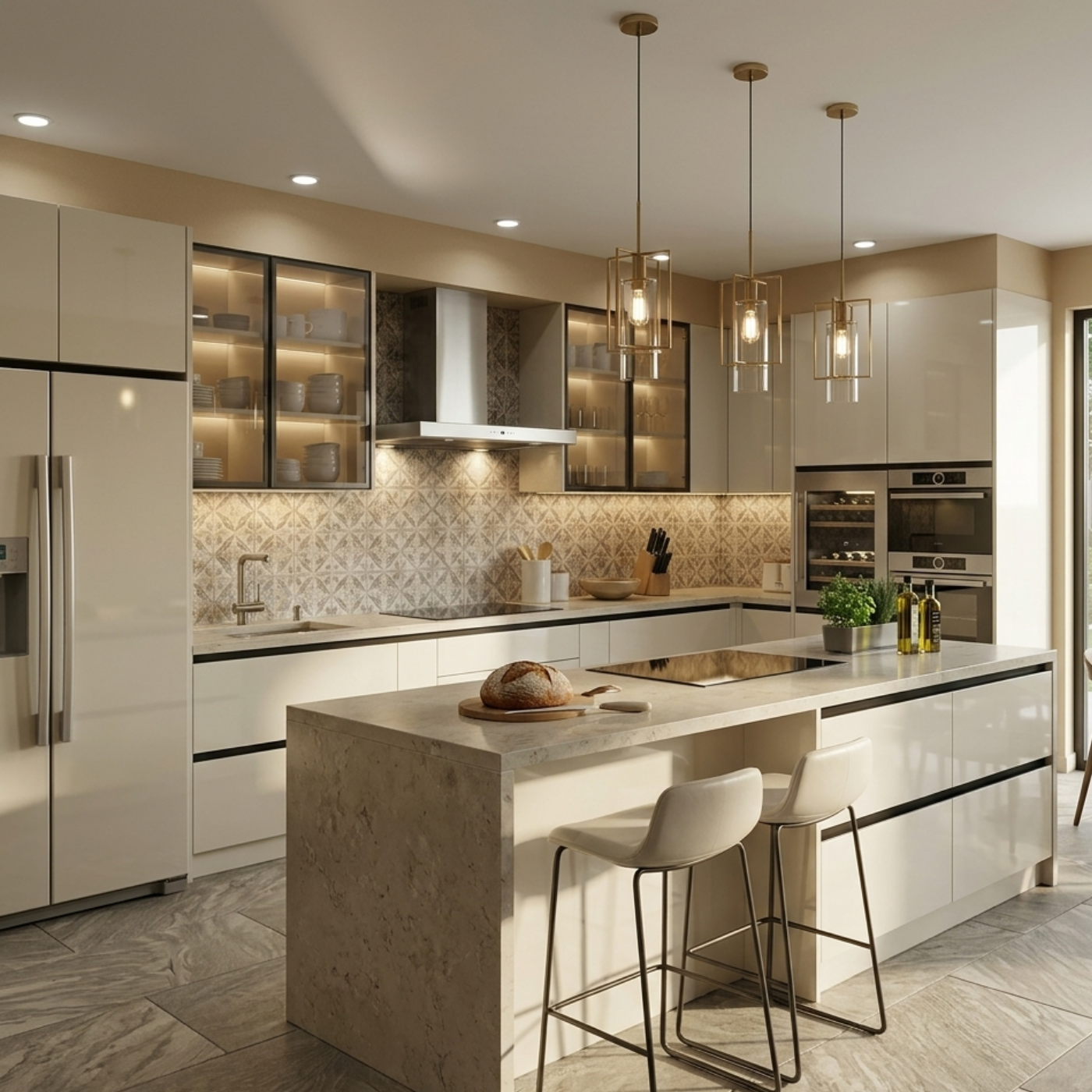
Learn how to build a modular kitchen that stays stylish and durable for 10+ years with smart planning, quality materials, and expert execution.
A brand-new modular kitchen is a sight to behold. On the day installation concludes, the glossy or matte shutters gleam perfectly under the ambient lights, the drawers glide open with a silent whisper, and the pristine countertops look untouched by the realities of culinary labor. For the first few months, every homeowner feels a deep sense of pride in their investment.
However, the real test of a premium kitchen layout does not happen on day one, or even on day one hundred. The true test occurs around year five, year seven, and crucially, year ten.
In a typical Indian household, the kitchen faces structural stresses that few other rooms in the house ever experience. It is subjected to daily high-heat cooking, heavy oil splatters, turmeric and deep spice stains, chemical cleaning agents, and constant moisture from utensil washing. Under these relentless conditions, low-grade modular kitchens quickly deteriorate—shutters begin to sag, edge-bands peel off, wire baskets catch rust, and wood-substitutes swell up due to internal water absorption.
Building a kitchen that looks and functions exactly like new after a decade requires a shift in mindset. You must move past superficial showroom designs and focus deeply on foundational material engineering, heavy-duty hardware choices, and defensive spatial planning. This comprehensive guide outlines the exact roadmap to creating a timeless, high-performance kitchen ecosystem that defies the aging process.
True luxury in kitchen design is defined by long-term structural integrity. If a surface looks exceptional but fails to withstand the micro-climate of a high-heat cooking space over a decade, it is an engineering failure, not a premium design.
1. The Core Foundation: Specifying Core Materials That Defy Moisture and Time
The most beautiful kitchen shutters in the world are only as good as the core material supporting them underneath. If your underlying carcass material is weak, your kitchen has an expiration date. The biggest mistake homeowners make is assuming all engineered wood panels are created equal.
The Problem with Particleboard and Low-Tier MDF
In high-end interior galleries, particleboard and Medium-Density Fiberboard (MDF) are frequently used because they offer smooth finishes and flat surfaces for laminates or veneers. However, using these materials in a real-world kitchen environment can lead to long-term issues.
Particleboard consists of compressed wood chips bound together by resins, while MDF uses fine wood fibers. Neither material possesses an organic internal grain structure capable of resisting moisture over a long period.
When water vapor from boiling pots or minor plumbing leaks under the sink penetrates the edge-banding of particleboard or standard MDF, the internal fibers absorb the liquid like a sponge. Once the moisture enters, the core swells internally, causing the outer laminate layers to split, crack, and delaminate.
Furthermore, once these compressed fibers expand, they lose their density. This means the screws holding your heavy soft-close hinges lose their grip, leading to permanently sagging shutters that can no longer align correctly.
The 10-Year Gold Standard: BWP Marine Plywood and High-Density HMR Boards
To guarantee a decade of flawless service, your kitchen blueprint must specify materials designed to handle high humidity and direct water contact.
-
Boiling Water Proof (BWP) Marine Plywood: This is a non-negotiable requirement for high-moisture zones, particularly the sink cabinet base and the areas immediately surrounding your dishwasher or water purifier. BWP plywood is manufactured using selected hardwood plies bonded with un-extended phenol-formaldehyde resin under extreme pressure. It can withstand prolonged immersion in water without delaminating or losing its structural load-bearing capacity.
-
High-Moisture Resistant (HMR) Boards: For dry wall cabinets or pantry towers away from direct water sources, high-density HMR or exterior-grade High-Density Fiberboard (HDF) can provide a solid alternative. These boards feature special hydrophobic resin formulations through the core, ensuring that even if humidity spikes during deep steam cooking, the panel dimensions remain stable over time.
2. Navigating the Invisible Financial Decisions
When planning a kitchen meant to last ten years, understanding the financial realities of material selection is crucial. Many homeowners run into budgetary or structural issues because they focus their funds entirely on high-end external looks while overlooking the quality of the internal components.
Balancing Looks and Longevity
True value in a kitchen build comes from distributing your budget across structural integrity rather than purely cosmetic enhancements. Investing heavily in imported glass shutters while opting for cheaper internal carcasses or non-branded soft-close hinges can lead to structural wear within just a few years. Balancing your investment wisely helps prevent early degradation.
Design Tip: To understand how to properly balance your financial breakdown between visible finishes and invisible structural elements without facing surprise quotes, review our detailed local market analysis. Read More Blog: The Hidden Truth About Modular Kitchen Pricing in Haldwani Most Dealers Don’t Tell You
3. Surface Engineering: Selecting Finishes That Resist Stains and Scratches
The exterior surface finish of your modular kitchen defines its overall aesthetic, but it also serves as the frontline defense against daily wear and tear. Over a ten-year timeline, your kitchen shutters will be touched tens of thousands of times with hands that may be stained with oils, spices, or grease.
The Realities of Premium Finishes
Different premium finishes offer varying levels of durability and require distinct maintenance approaches over a ten-year lifespan:
Finish Type: High-Gloss Acrylic
-
Scratch Resistance: Moderate (Requires Care)
-
Stain Resistance: Exceptional
-
10-Year Visual Lifespan: Retains gloss; needs regular micro-fiber cleaning
Finish Type: Anti-Fingerprint Matte
-
Scratch Resistance: High
-
Stain Resistance: High
-
10-Year Visual Lifespan: Resists smudges; maintains a contemporary look
Finish Type: Premium High-Pressure Laminate (HPL)
-
Scratch Resistance: High
-
Stain Resistance: High
-
10-Year Visual Lifespan: Highly durable; highly cost-effective over time
Protecting Against Edge-Banding Failure
A critical area where kitchen shutters begin to show their age is along the thin perimeter edges. If your fabricator uses manual gluing methods or low-grade adhesive compounds, the constant exposure to hot air rising from hobs or steam from dishwashers will dry out the glue line.
Within three to five years, the edge-band can start to crack and pull away from the shutter core, exposing the raw inner wood to dirt and humidity.
To prevent this, ensure your shutters are edge-banded using high-performance PUR (Polyurethane) bonding technology on fully automated, industrial edge-banding machinery. PUR adhesives form a chemical bond with the substrate that is highly resistant to heat, water vapor, and mechanical stress, keeping the edge seam completely sealed for a decade.
4. Hardware and Internal Mechanisms: The Unsung Heroes of Longevity
If the core material represents the skeleton of your kitchen, the hardware and internal moving mechanisms represent the joints and muscle systems. A kitchen shutter can be made of the most durable marine plywood, but if the hinge supporting it fails, the shutter cannot function.
The Physics of Soft-Close Hinges
Every time a cabinet shutter is opened or closed, the internal spring mechanism experiences physical stress. Cheap, generic hinges use low-grade steel alloys and lower-tier hydraulic oil cylinders. Over a few years, the hydraulic oil seals degrade, causing the oil to leak out, and the soft-close feature fails completely, resulting in heavy wood-on-wood slamming every time a cabinet closes.
Investing in top-tier, globally certified hardware systems ensures your kitchen remains operational over the years. Premium hinges are rated for over 200,000 opening and closing cycles, meaning they are engineered to perform smoothly for well over fifteen years of normal use. They feature built-in overload safety systems, ensuring that even if a child accidentally pulls downward on an open shutter, the internal alignment mechanisms remain undamaged.
Transitioning from Wire Baskets to Full-Extension Tandem Boxes
Traditional modular kitchens often utilized pull-out stainless steel wire baskets resting on standard side-mounted roller runners. While budget-friendly initially, these setups present clear limitations over a ten-year timeline:
-
Uneven Weight Distribution: Wire baskets allow small particles of dust, crumbs, and liquids to fall directly through into the lower drawers, requiring frequent cleaning of the carcass floors.
-
Runner Failure Under Load: Standard side runners struggle with heavy cast-iron pots, stone mortar-pestles, and grain storage containers, leading to warping or sticking over time.
-
The Upgrade to Tandem Boxes: High-performance solid-walled tandem box drawer systems enclose items securely, preventing spills from spreading. They utilize heavy-duty concealed under-mount runners that easily handle substantial weight limits while maintaining smooth tracking.
5. Strategic Architectural Planning for First-Time Homeowners
When building a new home, executing your kitchen design in the correct sequence is critical. A lasting kitchen requires proper coordination of electrical points, water lines, drainage slopes, and counter layout choices long before the final woodwork is assembled.
Avoiding Sequential Design Mistakes
Many homeowners rush into purchasing appliances or selecting stone counters before mapping out their functional workspace layout. This lack of sequence can result in modern appliances blocking cabinet clearances or electrical lines being placed dangerously close to plumbing connections.
Design Tip: To ensure you set up your structural parameters, workflow zones, and utilities correctly from day one, take a look at our step-by-step master checklist. Read More Blog: The Ultimate Modular Kitchen Planning Guide for First-Time Homeowners
6. Countertop Engineering: Selecting a Surface That Defies Scratches and Heat
The kitchen countertop is the primary work surface where almost all meal preparation occurs. It is exposed to sharp steel knives, heavy spice grinders, direct heat from hot pans, and highly acidic substances like lemon juice, citrus peels, and vinegar. Choosing a countertop material that can withstand these daily challenges is essential for longevity.
The Risk of High-Porosity Natural Stones
While certain soft natural stones offer unique organic patterns, they can be highly porous. If a spill like turmeric oil or red wine is left on an unsealed soft natural stone surface for even an hour, the liquid can sink deep into the micro-pores of the rock, leaving a permanent stain that cannot be scrubbed away.
Additionally, soft natural stones can be prone to chipping along the edges if struck by heavy cookware.
The 10-Year Champions: High-Grade Granite and Engineered Quartz
To avoid countertop replacement or resurfacing bills down the line, stick to materials with high structural density:
-
Premium Low-Porosity Granite: Dark, tightly grained granites remain highly reliable options for intense cooking spaces. They are incredibly dense, scratch-resistant, and can handle a boiling pot set down directly on the surface without cracking or scorching.
-
Engineered Quartz Countertops: Quartz surfaces consist of roughly 90–93% crushed natural quartz crystals bound together with high-performance polymer resins. This engineering process yields a completely non-porous, highly uniform slab that resists bacterial growth, stains, and scratches, making it easy to wipe down and keep looking new.
7. Protective Ventilation and Appliance Integration
The long-term cleanliness and maintenance of your kitchen depend heavily on your ventilation setup. When heavy oils and spices are heated, they volatilize into a airborne vapor that can settle on upper cabinets, walls, and ceilings.
The Importance of Correct Chimney Sizing
If your kitchen ventilation system lacks sufficient suction power or is installed at an incorrect height above your cooktop, an ultra-fine layer of greasy dust will steadily accumulate across all your high-end finishes. Over time, this grease can chemically bond with certain coatings, making it difficult to clean without marring the surface.
To prevent this buildup, ensure you choose an auto-clean chimney with an adequate suction rate based on your kitchen's physical dimensions. The ducting pipe should be as straight and short as possible; every extra 90-degree bend in a ventilation pipe reduces the real-world efficiency of your chimney motor, causing smoke and oil particles to linger in the room.
The 10-Year Longevity Master Checklist
Before finalizing your modular kitchen blueprint or production contract, ensure your installation team verifies these key elements for long-term durability:
-
Core Substrate Verification: Require BWP marine plywood for all base units and wet areas, and high-density HMR board for all dry upper cabinets.
-
PUR Seam Sealing: Confirm that all cabinet shutter panels utilize automated PUR hot-melt edge-banding to prevent seam separation from heat or moisture.
-
Concealed Under-Mount Runners: Use full-extension solid tandem drawers with dynamic weight capacities instead of standard side-mounted wire baskets.
-
Non-Porous Countertop Selection: Opt for high-density engineered quartz or low-porosity dark granite to prevent long-term deep staining.
-
Direct Ventilation Lines: Keep your exhaust ducting route straight with minimal bends to ensure oil particles are cleared from the room effectively.
By choosing durable core substrates, investing in verified mechanical hardware, and prioritising functional layout engineering over temporary showroom trends, you can build a high-performance modular kitchen that operates smoothly and retains its aesthetic value for a decade and beyond.
🔴 SCHEDULE YOUR 10-YEAR KITCHEN LONGEVITY CONSULTATION
Planning a luxury renovation and want to ensure your investment stands the test of time? Bring your architectural layout drawings to our experience center for a professional, material-engineering review.
-
Call / WhatsApp: +91 8979123945
-
Visit Our Experience Center: Kaladhungi Road, Haldwani, Uttarakhand
-
Explore Our Structural Work: www.kitchenworldhaldwani.com
Tags
Written by
Kitchen World