
Why Kitchen Cabinets Swell: Moisture, Water Damage & How to Prevent It
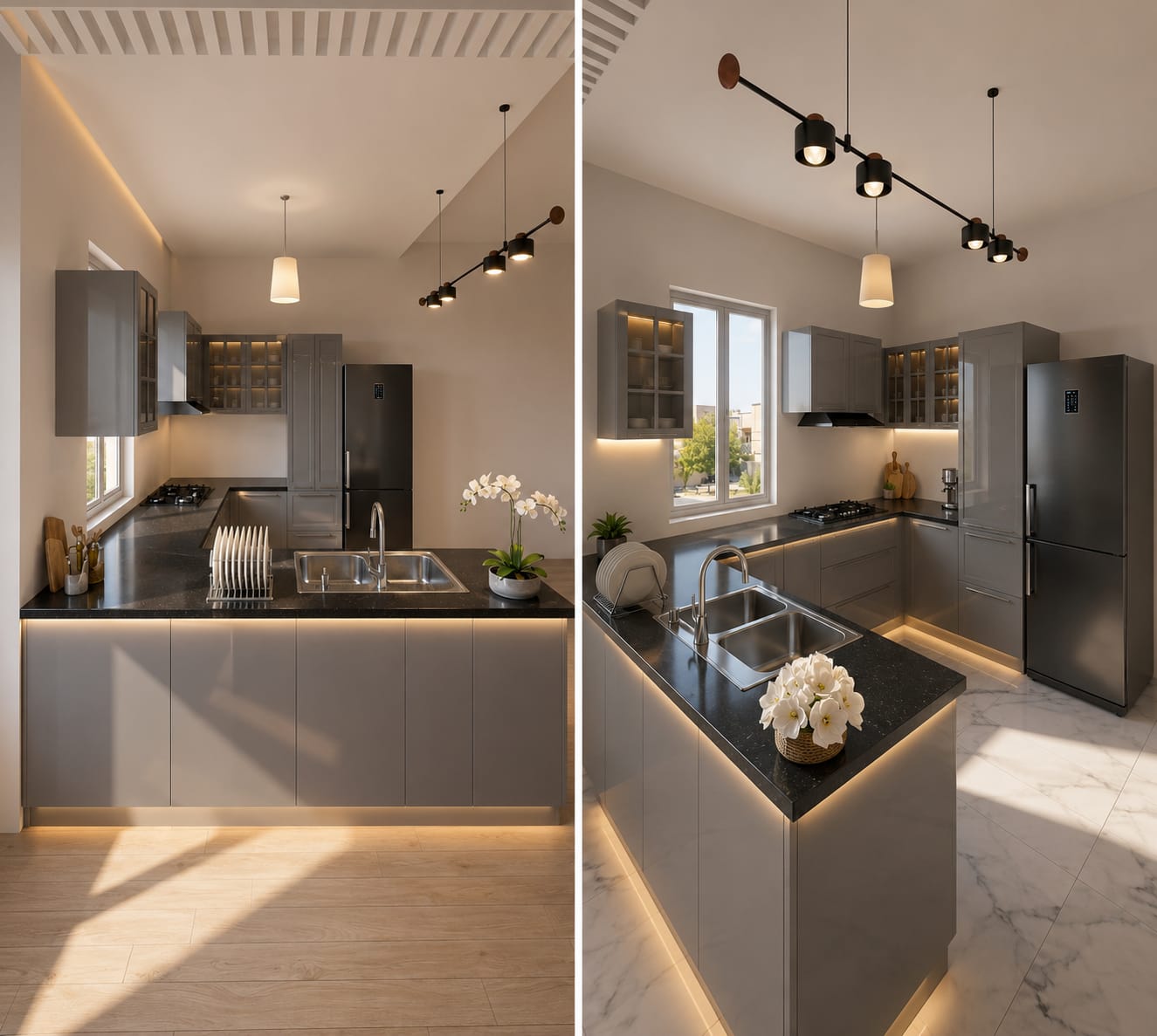
Learn why kitchen cabinets swell due to moisture and how proper materials, edge Protection, plumbing, and installation can prevent water damage.
A modular kitchen can look perfect when it is newly installed. The cabinets are aligned, shutters close smoothly, the countertop looks clean, and every corner feels fresh.
But after months or years of daily cooking, some homeowners begin noticing a different problem.
A cabinet near the sink starts looking swollen. The bottom edge becomes uneven. A shutter begins rubbing against another shutter. The laminate may start lifting, or the cabinet edge may feel soft.
In many cases, the problem is not simply "old furniture."
It is often the result of moisture entering the cabinet structure and reaching a material or edge that was not adequately protected.
This is especially important when planning a modular kitchen in Haldwani and the wider Kumaon region, where kitchens experience regular steam, water exposure, cleaning, and seasonal moisture.
Understanding why kitchen cabinets swell, and how to prevent it, can help you make better decisions about materials, installation, and everyday maintenance.
What Actually Causes Kitchen Cabinets to Swell?
Cabinet swelling generally begins when moisture reaches a vulnerable part of the cabinet.
This can happen through:
-
Water leaking from the sink area
-
Frequent splashing around the countertop
-
Steam from cooking
-
Wet cleaning cloths
-
Plumbing leaks
-
Poorly sealed cabinet edges
-
Water collecting near the bottom of cabinets
-
Moisture entering through damaged laminate or edge bands
-
Inadequate material selection for wet areas
The important point is that moisture does not always enter through the front of the cabinet.
It can enter through edges, joints, cut-outs, screw points, and exposed core material.
Once moisture reaches a moisture-sensitive core, the material can expand, weaken, and lose its original shape.
That is why simply choosing a beautiful exterior finish is not enough when designing a long-lasting modular kitchen.
1. The Sink Area Is the Highest-Risk Zone
If you want to identify the most moisture-sensitive part of a kitchen, start under the sink.
The sink area regularly encounters water. There may be splashes during washing, condensation around plumbing connections, damp cleaning cloths, and occasional leaks from the drainage or water supply system.
Even a small plumbing leak that goes unnoticed can gradually damage the cabinet below.
This is why the cabinet under the sink should be treated differently from a dry storage cabinet.
The material, edge protection, and internal construction should be appropriate for the amount of moisture the area is expected to encounter.
For a modular kitchen in Haldwani, this distinction is particularly important when planning the wet and dry zones of the kitchen.
2. Cabinet Edges Are More Important Than They Look
Most homeowners look at a cabinet and notice the laminate or outer finish.
But the real vulnerability may be underneath the surface.
Whenever a board is cut, its internal core becomes exposed along the cut edge. That edge needs to be properly protected.
If the edge protection is damaged, poorly bonded, or incomplete, moisture can gradually reach the core.
Once that happens, swelling can begin.
This is why quality cabinet construction involves much more than selecting a good-looking laminate.
The protection of the board's edges, joints, and cut-outs is an important part of long-term kitchen durability.
3. Not Every Cabinet Material Handles Moisture the Same Way
One of the biggest mistakes homeowners make is assuming that all boards used in modular kitchens behave similarly.
They do not.
Different materials have different levels of:
-
Moisture resistance
-
Structural strength
-
Screw-holding capacity
-
Dimensional stability
-
Resistance to swelling
-
Suitability for wet areas
A material that performs well in a dry wardrobe may not be the ideal choice directly below a kitchen sink.
This is why material selection should be based on where the cabinet will be installed, not simply on the material's name or price.
Kitchen World, for example, specifies HDHMR for dry areas and BWP-grade material for wet areas as part of its kitchen planning approach.
The principle is simple:
Different kitchen zones have different moisture exposure, so they should not necessarily be treated identically.
4. Steam Can Also Affect Your Kitchen
Most people think of water damage as something caused by visible leaks.
But kitchens also produce a large amount of steam.
Boiling water, pressure cooking, and everyday cooking release moisture into the surrounding environment.
Over time, repeated exposure to heat and moisture can test cabinet materials, adhesives, and edge protection.
This does not mean steam will automatically damage a properly constructed kitchen.
It means the kitchen should be designed with its actual operating environment in mind.
Good ventilation, a properly planned chimney, and suitable materials can all contribute to better long-term performance.
5. Why Swelling Often Starts Around the Bottom
Have you ever noticed cabinet damage beginning near the bottom edge?
There is a reason.
Water naturally moves downward. A small spill on the countertop can travel toward an edge. Water around the sink can collect underneath. A wet mop or cloth may remain against the lower cabinet area.
If the bottom edge is not adequately protected, repeated moisture exposure can eventually become a problem.
This is why cabinet construction should pay special attention to:
-
Bottom edges
-
Sink cut-outs
-
Plumbing openings
-
Corner joints
-
Floor-level areas
-
Areas immediately around the countertop
These may not be the most visible parts of the kitchen, but they can have a major effect on durability.
6. Poor Plumbing Can Damage Even a Good Kitchen
It is important to understand that cabinet material is not the only factor.
A high-quality cabinet can still develop water damage if there is a persistent plumbing leak.
Under-sink connections should therefore be checked periodically.
Look for:
-
Dripping pipes
-
Loose connections
-
Damp cabinet floors
-
Water marks
-
Unusual smells
-
Soft or swollen edges
If you notice moisture inside the cabinet, do not simply wipe it and forget about it.
Find the source.
A small plumbing problem is much easier to fix before it becomes a structural cabinet problem.
7. Don't Ignore the Dishwasher and Water Purifier Area
Modern kitchens have more water-connected appliances than traditional kitchens.
A dishwasher, RO purifier, and other water-based appliances can introduce additional plumbing connections into the kitchen.
These areas should be planned carefully.
Electrical, plumbing, and cabinet layouts should work together so that connections remain accessible and the surrounding cabinet structure is protected.
This is another reason professional kitchen design in Haldwani should begin before the cabinets are manufactured.
Once everything is installed, correcting a poorly planned plumbing route can become much more difficult.
8. How to Prevent Kitchen Cabinet Swelling
Prevention starts before installation.
Choose the Right Material for Each Zone
Wet areas should use materials appropriate for higher moisture exposure.
Protect Every Exposed Edge
Cut edges and joints should be properly sealed and finished.
Plan Plumbing Carefully
Water supply and drainage connections should be positioned so that they do not create unnecessary exposure to the cabinet structure.
Use Proper Sink Installation
The countertop and sink junction should be sealed appropriately to reduce water penetration.
Fix Leaks Immediately
Do not allow a small leak to continue for weeks.
Maintain Ventilation
Good ventilation helps control steam and moisture generated during cooking.
Keep Cabinet Interiors Dry
Avoid storing wet cleaning cloths or damp items inside closed cabinets.
These steps may appear small, but together they can significantly improve the life of a kitchen.
9. What Should You Look for Under the Sink?
Before approving your modular kitchen, ask your designer to show you the actual construction of the sink cabinet.
Check:
-
What material is being used?
-
How are the exposed edges protected?
-
How are plumbing cut-outs sealed?
-
Can the plumbing connections be accessed easily?
-
Is the cabinet base protected?
-
What happens if there is a small leak?
-
Is the material specifically suitable for a wet zone?
Do not judge the sink cabinet only from the outside.
The important details are often hidden inside.
10. Moisture Resistance Is Not the Same as Waterproofing
This distinction is important.
A material described as moisture-resistant should not be treated as a license to leave it exposed to standing water.
Every cabinet still needs proper construction, edge protection, installation, and maintenance.
Even a moisture-resistant material can experience problems if water is allowed to remain around it continuously.
Think of material selection as one layer of protection.
A durable kitchen requires multiple layers:
Suitable material + sealed edges + correct installation + good plumbing + regular maintenance
All five work together.
11. How Good Installation Helps Prevent Water Damage
A well-designed kitchen can still suffer if installation is careless.
During installation, the team needs to ensure that:
-
Cabinets are properly aligned
-
Countertop joints are correctly finished
-
Sink areas are sealed
-
Plumbing openings are properly managed
-
Cabinet edges are protected
-
Water does not collect against exposed surfaces
-
The final installation matches the approved design
This is one reason it is important to work with a kitchen company that controls the process from design to manufacturing to installation.
When different contractors handle every stage independently, important details can sometimes be missed between them.
12. What Homeowners in Haldwani Should Consider
Homes in Haldwani and the broader Kumaon region have their own practical considerations.
Kitchen design needs to account for moisture, seasonal weather conditions, cooking habits, water exposure, and the construction characteristics of the home.
Kitchen World specifically positions its approach around Kumaon's local climate and home conditions, including moisture, cold weather, uneven walls, and local water conditions.
This does not mean every home needs the same materials.
It means the kitchen should be designed according to the actual environment in which it will operate.
13. Don't Choose Materials Only by Price
When comparing modular kitchen quotations, homeowners often focus on the final price.
But a cheaper cabinet can become expensive if it needs repairs or replacement much earlier than expected.
Instead of comparing only the total quotation, compare:
Material → Thickness → Edge Protection → Hardware → Manufacturing Quality → Installation → Warranty
Ask what exactly is included.
A slightly higher initial investment in appropriate materials and construction may offer better long-term value if it reduces maintenance and replacement problems.
The cheapest kitchen is not necessarily the most economical kitchen.
14. Signs That Your Cabinet May Already Have Moisture Damage
If you already have a modular kitchen, watch for early warning signs.
These may include:
-
Swollen cabinet edges
-
Laminate lifting
-
Peeling edge bands
-
Shutters becoming difficult to close
-
A cabinet floor becoming uneven
-
Soft spots around the sink
-
Musty smells
-
Discolouration inside cabinets
-
Loose hinges or hardware caused by weakened material
Do not wait until the cabinet becomes visibly deformed.
Early detection can make repairs much simpler.
A Simple Kitchen Moisture-Protection Checklist
Before finalising your kitchen, check:
-
Wet and dry zones are identified
-
Suitable material is selected for wet areas
-
Cabinet edges are properly protected
-
Sink cut-outs are sealed correctly
-
Plumbing connections are accessible
-
Under-sink cabinet construction is moisture-conscious
-
Dishwasher and RO connections are planned
-
Chimney and ventilation are properly planned
-
Countertop and sink junctions are finished correctly
-
Leaks can be detected and repaired easily
-
Materials and construction details are documented
Final Thoughts
Kitchen cabinet swelling rarely happens because of one single factor.
It is usually the result of repeated moisture exposure combined with vulnerable materials, unprotected edges, poor installation, plumbing issues, or inadequate maintenance.
The good news is that many of these problems can be prevented before the kitchen is even manufactured.
If you are planning a modular kitchen in Haldwani, don't ask only how the kitchen will look.
Ask how it will perform after five years of cooking, cleaning, steam, water exposure, and everyday use.
Choose materials according to the zone. Protect vulnerable edges. Plan plumbing carefully. Give special attention to the sink cabinet. Maintain ventilation and fix leaks before they become larger problems.
At Kitchen World, the approach is to plan the kitchen around real-world conditions rather than treating every cabinet as if it will experience the same environment.
Because a durable kitchen isn't simply one that looks perfect on installation day. It's one that continues to perform when real life begins.
Tags
Written by
Kitchen World