
Why Most Kitchens Are Designed for Cabinets Instead of People
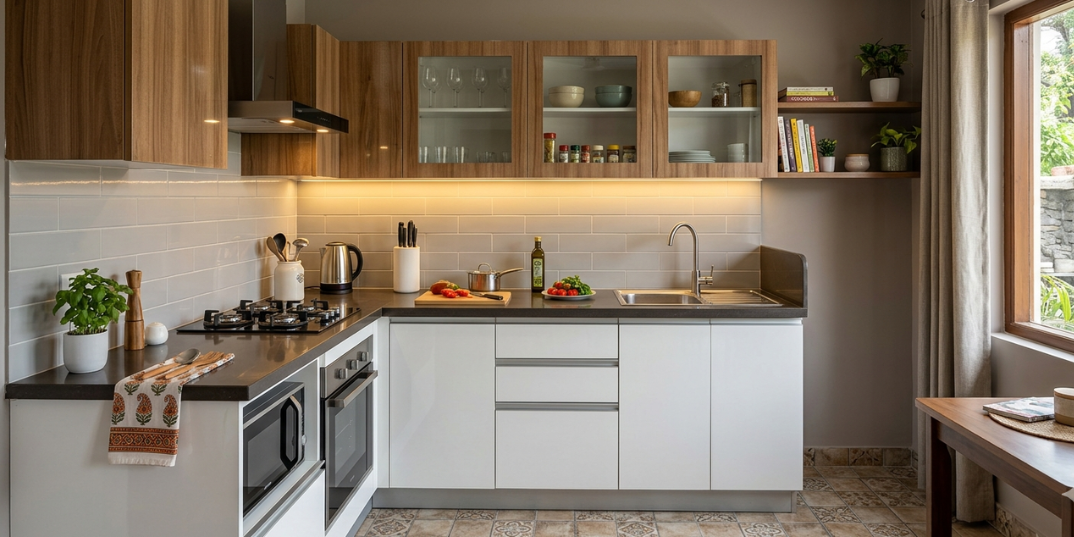
Stop forcing your body to fit your kitchen. Learn how custom counter heights and smart pull-out drawers create a human-centric layout built around you.
Walk into a standard modern kitchen, and you are immediately greeted by symmetrical rows of flawless woodwork, sleek hardware lines, and beautifully matched cabinet surfaces. On paper and in architectural blueprints, the space looks mathematically perfect. But the moment someone steps inside to actually cook a meal, that flawless perfection often shatters.
Suddenly, you find yourself stretching on your tiptoes to reach a spice container hidden in an ultra-high top cabinet. Minutes later, you are bending uncomfortably over a low counter to chop vegetables, feeling a familiar dull ache in your lower back. Within half an hour of cooking, the kitchen counters are cluttered with small appliances because there is no functional workspace left.
How did we get here? The reality is that a significant majority of kitchens are designed primarily to display beautiful cabinetry rather than to support the real, natural movements of human beings. They are built around the standardised dimensions of box cabinets instead of the physical comfort, height, and habits of the person standing inside them.
Designing a premium, long-lasting kitchen requires turning this old approach completely upside down. It requires a shift from cabinet-centric design to human-centric design, where ergonomics, workflow, and cultural cooking habits dictate the layout, structural engineering, and hardware choices.
A kitchen filled with expensive materials is a design failure if it forces the cook to adjust their body to the space. A truly premium kitchen adapts entirely to the natural ergonomics of the human body.
1. The Disconnect Between Standardized Boxes and Human Realities
The root cause of human discomfort in a modern layout stems from the mass manufacturing guidelines of standard cabinetry. Most commercial modular components are pre-fabricated according to fixed corporate templates: base units stand at a uniform height, wall units sit at a rigid distance above the stone, and deep shelves are cut to generalized measurements.
While this standardisation simplifies the assembly line for massive factories, it completely ignores the diverse physical needs of individual homeowners.
The Myth of the One Size Fits All Countertop Height
For decades, counter heights have hovered around a standard measurement of 34 inches from the finished floor level. This number assumes an average height for the primary user. If the primary cook in your home is shorter or taller than that average, a standard counter level will continuously strain their body.
-
The Strained Countertop: When a counter is too low, the cook must constantly lean forward from the hips, placing immense pressure on the lumbar spine during everyday activities like kneading dough or chopping hard vegetables.
-
The High-Shoulder Countertop: Conversely, if the counter is too high for a shorter individual, they must raise their shoulders and lift their elbows outward just to stir a deep pot, leading to chronic upper back and neck tension.
-
Custom Countertop Solutions: A human-centric space replaces fixed standards with custom height calculations. Before any stone slab is permanently fixed, the primary cook should test the height by standing naturally with elbows bent at a 90-degree angle; the counter should sit roughly 4 to 6 inches below the elbow level to ensure long-term comfort.
2. The Shifting Landscape of Modern Home Environments
As we re-evaluate how spaces are structured around human needs, we must also look at how regional home environments are evolving. Kitchens are no longer tucked-away utility rooms; they have become the central anchor points of the entire household.
Embracing Advanced Spatial Layouts
Modern interior planning across growing regional residential hubs is rapidly moving away from traditional, isolated masonry setups. Homeowners are increasingly demanding integrated spaces that support multi-tasking family members, open floor communication, and highly responsive storage ecosystems.
Design Tip: Understanding how modern spatial trends are redefining regional homes can help you design a space that looks contemporary while functioning seamlessly. Read More Blog: Is Modular Kitchen the Future of Homes in Haldwani and Kumaon?
3. The Myth of More Cabinets Equals Better Storage
When homeowners feel overwhelmed by clutter, their initial instinct is almost always to add more storage cabinets. They line every available wall with upper units, install tall floor-to-ceiling pantry towers, and fill every empty base space with a door. However, adding more standard cabinets rarely solves a storage problem; instead, it often creates a deep-reach accessibility nightmare.
The Inaccessibility Trap of Deep Base Shelves
A standard 24-inch-deep base cabinet featuring standard interior wood shelves is a prime example of cabinet-first design. It looks spacious from the outside, but accessing anything deep inside requires a frustrating routine.
You have to kneel down on the floor, reach blindly into a dark corner, and remove half a dozen heavy pots and pans just to find a single missing lid hidden at the back. Over time, items stored in these deep recesses vanish from sight completely, leading to accidental duplicate purchases and wasted shelf space.
The Pull-Out Human-Centric Alternative
To build an accessible space, you must eliminate static, deep shelves below the countertop entirely.
-
Full-Extension Tandem Drawers: Replacing old lower doors with full-extension drawers brings the contents out to you. With a simple pull, you can look straight down at every item instantly without kneeling or straining.
-
Integrated Corner Hardware: Standard L-shaped layouts often leave massive blind spots in the corners. Installing intelligent swing-out carousels or magic pull-out trays converts those unreachable dark zones into highly functional storage.
-
Vertical Lift-Up Wall Units: Old-fashioned overhead cabinet doors open outward into your face, forcing you to step back constantly while cooking. Swapping them for vertical bi-fold lift systems allows the doors to glide smoothly up and out of the way, leaving the entire workspace open and safe.
4. Prioritizing Aesthetics Over Everyday Usability
First-time renovators often fall into the trap of designing a space purely for visual impact. They select ultra-delicate finishes, handle-less touch mechanisms, and complex multi-tiered lighting configurations based entirely on showroom samples, without considering how those choices hold up to real-world usage.
Balancing Style, Functionality, and Physical Comfort
A high-performance kitchen must strike an exact balance between high-end style, functional ergonomics, and day-to-day physical comfort. Selecting an exceptionally beautiful matte finish means very little if it absorbs oil smudges constantly and requires aggressive chemical scrubbing that ruins the surface over time.
Finish Type: Upper Overhead Units
-
Cabinet-Centric Approach: Deep, side-hinged doors that open into workspace
-
Human-Centric Approach: Slimmer profile, vertical lift-up soft-close systems
Finish Type: Base Internal Storage
-
Cabinet-Centric Approach: Fixed structural wooden shelves requiring kneeling
-
Human-Centric Approach: Full-extension pull-out metal and tandem drawers
Finish Type: Workspace Lighting
-
Cabinet-Centric Approach: Single overhead fixture causing forward shadows
-
Human-Centric Approach: Under-cabinet LED strip profiles for task areas
Design Tip: True luxury is achieved when high-end visual design coordinates smoothly with effortless daily ergonomics. Read More Blog: The Perfect Blend of Style Functionality Comfort
5. Blind Spots in Everyday Architecture: Lighting and Ventilation Placements
When a layout focuses on balancing cabinet doors instead of the user's workflow, critical functional elements like light angles and ventilation efficiency are often completely overlooked.
Eliminating Work-Zone Shadows
A very common error in cabinet-first design is installing a single, powerful light fixture right in the center of the ceiling. When you stand at the counter to chop food or read a recipe, your body blocks that central light, casting a deep shadow directly over your workspace and sharp knives.
A human-centric layout remedies this by incorporating dedicated task lighting. Installing continuous LED profile strips directly underneath the upper wall cabinets ensures your active workspace is bright, safe, and clear of distracting shadows.
Engineering Clean Air Flow
Heavy Indian cooking involving oils, turmeric, and high-heat spices creates an intense micro-climate of steam and airborne grease. If your chimney ventilation system is positioned strictly to fit a symmetry of cabinets rather than the actual heat output of your stove, grease will settle across all your premium surfaces.
To keep the workspace comfortable and clean, the chimney must match the heat volume of your cooktop perfectly. The ducting route should run straight out of the house with minimal turns, ensuring cooking odors and heat are removed before they can spread to the rest of your home.
Master Checklist for a Human-Centric Kitchen Layout
Before signing off on your kitchen design or production contract, review this five-step checklist to ensure your space is optimized for people, not just cabinets:
-
Custom Counter Heights: Ensure the final counter height sits exactly 4 to 6 inches below the elbow height of the primary cook.
-
Zero Low Shelves: Replace standard bottom doors and shelves with full-extension tandem boxes for top-down visibility.
-
Overhead Clearance Safety: Use vertical lift-up mechanisms for wall cabinets instead of standard outward-swinging doors.
-
Under-Cabinet Task Lights: Install recessed LED strip lighting under upper units to completely eliminate dark workspace shadows.
-
Straight Ventilation Paths: Keep chimney ducting short with minimal bends to clear grease and cooking odors efficiently.
By moving away from standard, rigid cabinet boxes and respecting the hard laws of human ergonomics, you can transform your kitchen from a frustrating storage gallery into a responsive, highly comfortable workspace that you will love using every single day.
🔴 REQUEST A PROFESSIONAL KITCHEN ERGONOMICS AUDIT
Stop adjusting your body to a poorly planned kitchen layout. Bring your architectural floor plans to our experience center for a complete, human-centric design consultation.
-
Call / WhatsApp: +91 8979123945
-
Visit Our Experience Center: Kaladhungi Road, Haldwani, Uttarakhand
-
Explore User-First Designs: www.kitchenworldhaldwani.com
Tags
Written by
Kitchen World