
Materials & Hardware Science
Understanding What Actually Goes Inside Your Kitchen
When people hear "materials" and "hardware", they often assume it's technical or complicated.
In reality, it's not.
You don't need to memorise specifications.
You only need to understand what affects durability, what affects daily usage, and what cannot be changed later.
This page explains those basics clearly and simply.
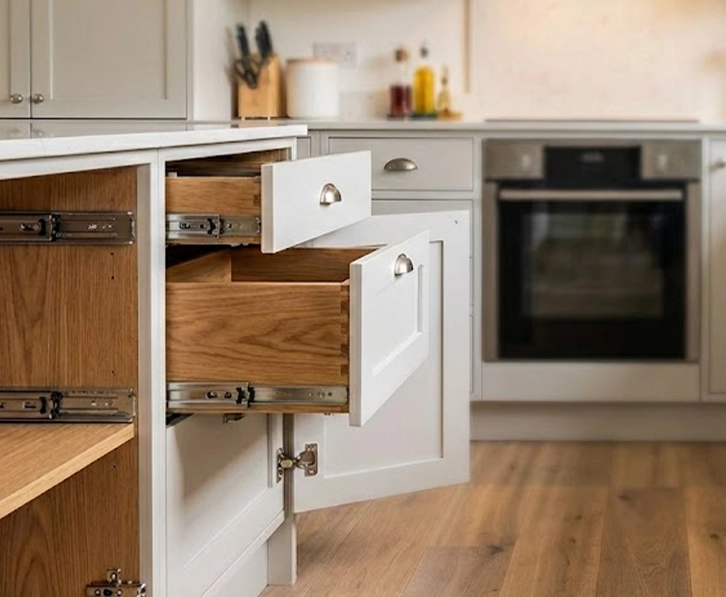
Why Materials Matter More Than Finishes
When choosing a kitchen, most people naturally focus on what they can see colour, texture, and overall look.
Those things matter.
But they are not what decides how long your kitchen lasts.
Finishes
Finishes are the outer layer.
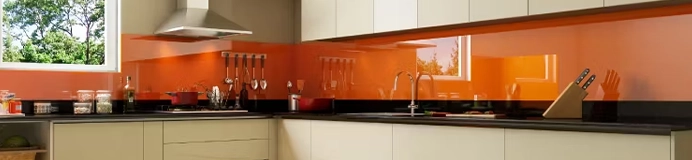
Materials
Materials are the foundation underneath.
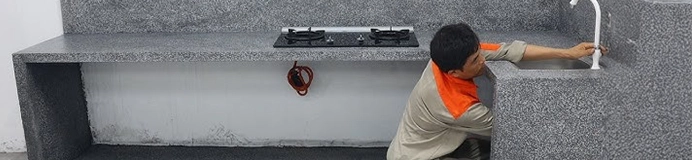
A kitchen can look perfect on installation day and still develop problems later if the internal materials are weak.
What Good Materials Actually Do
Good Internal Materials
- Handle moisture without swelling
- Stay straight and aligned over time
- Support hinges and drawers properly
A simple way to think about it
You can change how a kitchen looks later.
It is much harder to change how a kitchen is built.
That's why material decisions should come before discussions about colour and finish.
Poor Materials Show Problems Slowly
- Shutters start sagging
- Cabinets lose shape
- Hardware feels loose
These issues are difficult to fix once the kitchen is installed.
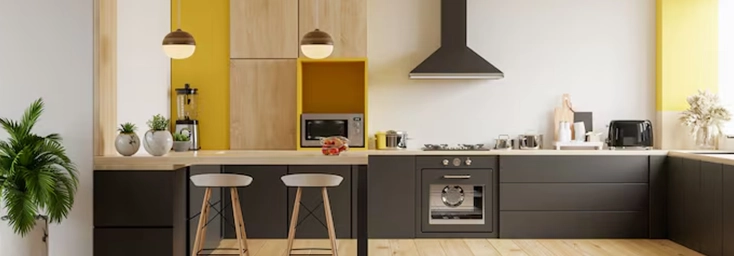
Understanding Cabinet Structure (In Simple Terms)
Every modular kitchen cabinet is built from a few basic parts.
You don't need to know technical names just what each part does.
At its core, a cabinet has:
-
1
A box that holds everything together
-
2
A shutter that you see and open
-
3
A back panel that supports the structure
Among these, the box (also called the carcass) is the most important.
Why the cabinet box matters most
The cabinet box:
- Holds the weight of shelves and drawers
- Carries the load of appliances
- Supports hinges and hardware
If this internal structure is weak, even the best-looking shutters won't perform well.
What usually goes wrong
When cabinet structure is compromised:
- Shelves start bending
- Hinges loosen over time
- Alignment issues appear
These are not finishing problems.
They are structural ones.
Hardware: The Parts You Use Every Day
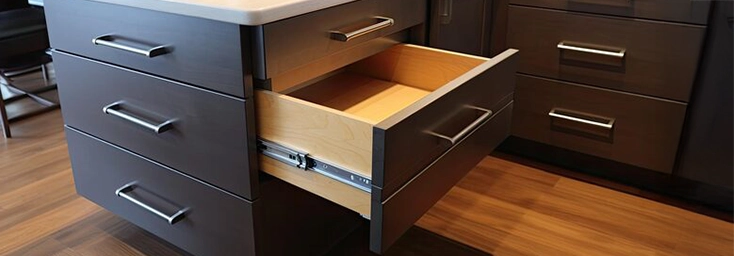
Hardware includes hinges, drawer channels, lift-up systems, and pull-out mechanisms.
These are the parts you touch and use every single day.
While hardware is not always visible, it has the biggest impact on how a kitchen feels in daily use.
What good hardware feels like
Good hardware:
- Opens and closes smoothly
- Handles weight comfortably
- Feels stable and controlled
You may not notice good hardware immediately but you will definitely notice poor hardware over time.
A simple way to judge hardware
If a drawer feels light when empty but struggles when filled, that's a sign the hardware is not designed for real usage.
Hardware should perform well when the kitchen is fully in use, not just during installation.
Why hardware quality matters
Lower-quality hardware often:
- Feels fine at first
- Becomes noisy with use
- Loses alignment under load
Since hardware is used multiple times a day, even small issues become frustrating quickly.
Moisture, Heat, and Indian Cooking Conditions
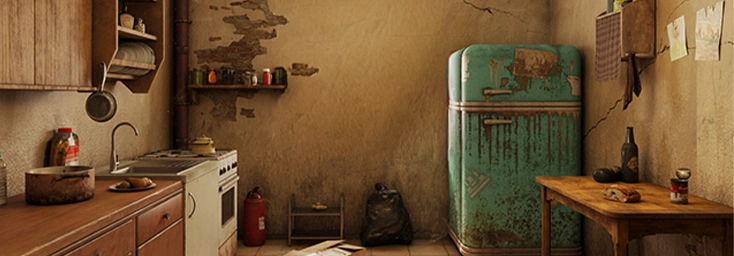
Indian kitchens are used differently from kitchens shown in catalogues.
They deal with more heat, more steam, and more frequent cleaning.
Cooking methods, pressure cooking, frying, and daily washing all affect how a kitchen performs over time.
Why environment matters
Heat and moisture slowly test a kitchen's internal strength.
If materials are not suitable:
- Cabinets absorb moisture
- Edges start swelling
- Hardware loses performance
These changes don't happen immediately they appear gradually.
A common misconception
If a kitchen looks strong, it must be strong.
In reality, strength depends on how materials react after years of use, not on day one.
Planning with real usage in mind
A kitchen should be planned based on:
- How often you cook
- Type of cooking you do
- Ventilation available
- Cleaning habits
Materials and hardware must support this reality, not just showroom conditions.
What Is Difficult to Change Later
Not every part of a kitchen carries the same weight.
Some things can be updated later with ease.
Others are deeply connected to the structure and are difficult to change once installed.
Understanding this difference helps you decide where to spend attention during planning.
Difficult to change later
These elements are usually fixed once the kitchen is installed:
- Cabinet carcass material
- Internal cabinet dimensions
- Hardware alignment and load capacity
Changing these later often requires dismantling large sections of the kitchen.
A helpful planning mindset
Give more importance to decisions that affect structure and daily use.
Aesthetic choices can follow once the foundation is strong.
Easier to change later
Some elements are more flexible:
- Shutter finishes
- Handles and knobs
- Surface colours
These can be refreshed without disturbing the entire kitchen.
What Really Makes a Kitchen Last
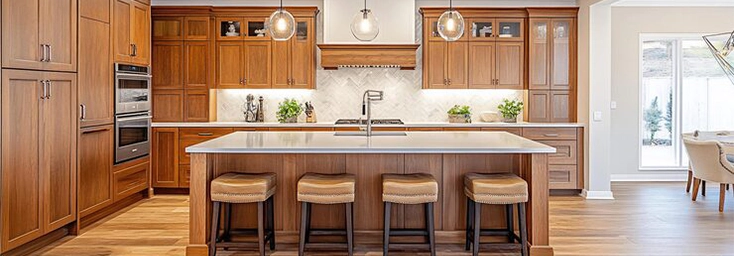
A good kitchen does not depend on choosing the most expensive materials.
It depends on choosing the right materials for the right purpose.
When planned correctly:
- Kitchens age better
- Daily use feels effortless
- Repairs and adjustments reduce significantly
The key takeaway:
Understanding these basics helps you ask better questions no matter where you choose to build your kitchen.
Next step:
If you're curious about how these decisions are actually made during a real project, the next page explains our planning process step by step.