
How to Plan Your Kitchen Layout (The Golden Triangle Rule)
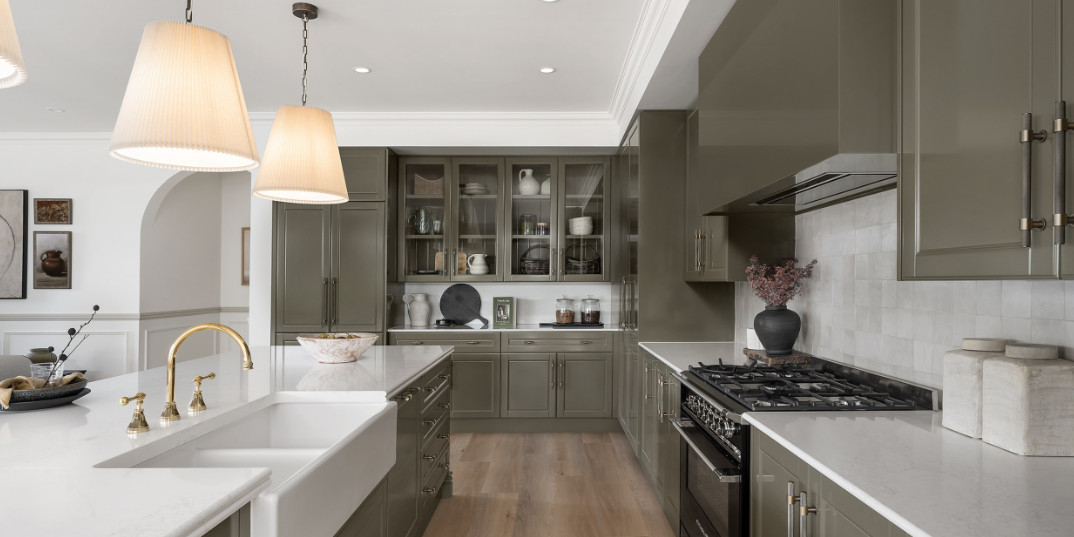
Master the science of the kitchen Work Triangle. Learn how to map out the perfect layout using geometric rules that eliminate daily cooking fatigue.
When walking into a home improvement gallery, it is remarkably easy to get swept away by the surface-level details of kitchen design. Homeowners frequently spend hours examining the subtle undertones of high-pressure laminates, testing the seamless touch-to-open mechanics of modern overhead cabinetry, or selecting the perfect shade of low-porosity engineered quartz countertops. While these aesthetic decisions dictate the initial visual response to your home, they have almost zero impact on how you actually feel when preparing a meal on a hectic Tuesday evening.
The real quality of a kitchen is revealed through its spatial choreography. It is determined by the number of steps you must take to move a heavy boiling pot from the sink to the cooktop. It is measured by whether two people can easily pass each other without colliding while one washes vegetables and the other monitors a simmering pot. It is proven by how quickly you can retrieve cold ingredients from the refrigerator and place them onto a dedicated preparation workspace.
When a kitchen layout is poorly mapped out, cooking becomes physically exhausting. You find yourself constantly dodging open cabinet doors, walking back and forth across a massive floor space just to collect basic ingredients, and dealing with cluttered countertops because your active preparation zones clash with your storage areas.
To prevent these daily frustrations, kitchen architects rely on a time-tested layout framework known globally as The Work Triangle or The Golden Triangle Rule. This comprehensive guide provides an in-depth look into the architectural science of the Work Triangle, breaks down the five primary layout shapes, and outlines the exact planning steps required to build a kitchen that functions with complete efficiency.
1. Deconstructing the Science of the Golden Triangle
The concept of the Work Triangle was developed in the 1940s by the University of Illinois School of Architecture. Originally designed to minimize unnecessary physical labor and optimize industrial home efficiency, the core physics of the rule remain incredibly accurate today.
At its foundation, the Work Triangle path identifies the three most active functional zones inside any kitchen and treats them as the three distinct points of a geometric triangle:
-
Point 1: The Preparation and Water Zone (The Sink): This is the high-traffic operational hub where vegetables are rinsed, knives are utilized, and dirty dishes are stacked before and after cooking.
-
Point 2: The Thermal Cooking Zone (The Stovetop/Hob): The high-heat active area where cooking, frying, and baking take place, requiring direct ventilation and surrounding heat-safe counter space.
-
Point 3: The Cold Storage Zone (The Refrigerator): The initial entry point of food items, where fresh ingredients are kept before being moved into preparation.
The Stovetop / Hob sits at the top vertex, with lines extending down to form a triangle with The Sink on the bottom left and The Refrigerator on the bottom right.
The Exact Geometric Rules of an Efficient Triangle
Simply placing a refrigerator, sink, and stove in a room does not automatically create an efficient triangle. To achieve true ergonomic comfort, your layout blueprint must strictly follow these exact mathematical distance limits:
-
Individual Side Lengths: The physical distance along any single leg of the triangle must measure at least 4 feet but should not exceed 9 feet. If a leg is shorter than 4 feet, the workspace feels cramped and dangerous; if it stretches past 9 feet, you will waste immense physical energy simply walking back and forth across the room.
-
Total Combined Perimeter: The total sum of all three legs of the triangle combined must fall between a minimum of 12 feet and a maximum of 26 feet.
-
Zero Structural Interruption: No major full-height architectural elements—such as a tall pantry tower, an island counter corner, or an outward-swinging refrigerator door—should ever cut across the paths of the triangle. The movement lines between the sink, stove, and refrigerator must remain completely clear.
2. Structural Precision Before Spatial Planning
When mapping out your physical layout and calculating your Work Triangle perimeters, executing your structural build in the correct order is absolutely critical. Many first-time renovators make the mistake of selecting their cabinetry layouts before coordinating their on-site plumbing connections, gas lines, and high-power electrical points.
If your structural utilities are placed without a clear spatial plan, you can run into major layout conflicts—such as finding your refrigerator cut off from the main workspace because an electrical point was placed in the wrong corner, or discovering that a structural pillar forces your stove too close to your sink.
Achieving a flawless layout requires utilizing a systematic planning approach where the room's physical dimensions, utility paths, and cabinetry engineering are completely synchronized before any structural materials are ordered.
Design Tip: To understand the hidden structural value of precise spatial planning over traditional on-site construction methods, take a look at our detailed longevity analysis. Read More Blog: Carpenter vs. Professional Modular Kitchen: Long-term Value
3. Adapting the Golden Triangle to the 5 Primary Kitchen Layouts
Every residential floor plan features unique structural parameters. Whether you are dealing with a long, narrow apartment hallway or a massive open-plan villa room, the Golden Triangle rule can be adapted to fit five primary architectural kitchen layouts:
Layout 1: The L-Shaped Kitchen (The Adaptable Champion)
The L-Shaped layout is one of the most popular configurations for modern homes because it fits perfectly into corner spaces, leaving the rest of the room open for dining tables or family movement.
-
Triangle Application: This layout uses two perpendicular walls to create a natural, unhindered triangle shape. Typically, the refrigerator is placed at one far end of the long wall, the sink sits further down the same wall, and the stovetop is positioned on the short wall.
-
The Ergonomic Benefit: By spreading the work points across two intersecting paths, you create a highly efficient workflow with ample uninterrupted counter space between the active zones.
Layout 2: The U-Shaped Kitchen (The Chef’s Sanctuary)
If your home features a dedicated room with three structural walls, the U-Shaped layout provides an incredibly functional environment for deep, intensive cooking.
-
Triangle Application: This layout assigns one primary work point to each of the three walls. For example, the refrigerator anchors the left wall, the sink centers the middle wall beneath a window, and the hob dominates the right wall.
-
The Ergonomic Benefit: This shape keeps all three essential zones within arm's reach of a single central standing point, minimizing steps and providing massive amounts of lower cabinet storage.
Layout 3: The Parallel / Galley Kitchen (Industrial Efficiency)
Modeled after the ultra-efficient compact galleys found on commercial ships and professional restaurants, the Parallel layout utilizes two facing walls separated by a central aisle.
-
Triangle Application: The best practice is to place the sink and the stovetop on one side of the room, separated by a long preparation counter, while the refrigerator and tall storage units sit directly on the opposite wall.
-
The Ergonomic Benefit: This configuration completely separates the wet preparation work from the dry cold storage. To maintain safe clearance, ensure the central walking aisle measures at least 4 feet wide so cabinet doors can open fully without blocking movement.
Layout 4: The Island Kitchen (The Modern Hub)
For spacious, open-plan homes where the kitchen serves as a social gathering area, the Island layout is an exceptional choice.
-
Triangle Application: The main perimeter wall holds two points of the triangle (such as the refrigerator and the cooktop), while the third point—frequently the sink or a secondary food prep station—is built right into the center of the freestanding island counter.
-
The Ergonomic Benefit: This structure allows the cook to face outward toward the living area while washing ingredients or prepping food, keeping them connected with the rest of the family.
Layout 5: The Straight / One-Wall Kitchen (The Compact Solution)
Commonly found in smaller urban studio apartments or secondary guest floors, this layout forces all appliances and cabinets to sit along a single structural wall.
-
Triangle Application: Because a true geometric triangle cannot exist on a single flat plane, efficiency is achieved by focusing on linear sequence. The optimal linear order is: Refrigerator ➔ Preparation Counter ➔ Sink ➔ Cooking Counter ➔ Stovetop.
-
The Ergonomic Benefit: This setup keeps your workflow moving logically in one single direction—from initial storage to washing, chopping, and finally cooking—preventing messy backtracking.
4. The Critical Sub-Zones That Complete a Human-Centric Layout
While the big three points of the Golden Triangle dictate your broad movements, the smaller spaces sitting between those points determine your daily comfort. A layout can fail even with a mathematically perfect triangle if these critical counter sub-zones are omitted:
The Landing Zones (The Buffer Spaces)
Every major point of your Work Triangle requires an adjacent clear countertop space, known in architecture as a landing zone. These buffer spaces act as resting spots for heavy, hot, or raw items.
-
Refrigerator Landing Zone: You need at least 15 inches of clear, open counter space right next to the handle side of your refrigerator. This allows you to set down a heavy bag of groceries or unpack ingredients easily without walking over to a distant counter.
-
Stovetop Landing Zone: Ensure there are at least 12 inches of heat-safe countertop on one side and 18 inches on the other side of your hob. This provides a safe spot to turn pan handles away from traffic and set down boiling pots instantly in an emergency.
-
Sink Landing Zone: Maintain a minimum of 24 inches of clear space on one side of the sink for stacking unwashed plates, and at least 18 inches on the opposite side for a clean dish-drying rack.
5. Budgeting and Cost Mapping for Your Custom Layout
As you begin to visualize the ideal layout shape and accessory configurations for your home, understanding how these spatial choices translate into actual component expenses is a critical next step. The overall shape of your kitchen, the number of corner units required, and the choice of premium internal pull-out drawers all impact your final investment profile.
To help you navigate these design decisions and avoid unexpected pricing surprises, calculating your budget requirements early in the planning phase is highly recommended. Using a structured cost assessment tool allows you to map out your layout options and see how different material grades change your project estimate.
Design Tip: To get a clear, step-by-step financial breakdown tailored to your specific room shape and material preferences, explore our digital budget tool. Read More: Cost Calculator
6. Eliminating Layout Blind Spots: Lighting and Ventilation Pathways
A highly efficient Work Triangle must be supported by proper lighting and ventilation systems to function safely and comfortably over time. Without these supporting elements, your workflow can still face daily challenges.
Task Lighting Integration
A single, central overhead ceiling light fixture is a common layout mistake. When you stand at the main preparation counter to chop food, your body blocks that central light, casting a deep shadow over your workspace.
A human-centric layout resolves this by incorporating dedicated under-cabinet LED profile lights. These lights sit hidden beneath the upper wall units, casting clear, bright illumination directly over your active work surface to ensure maximum safety.
Ventilation and Airflow Mapping
The position of your stovetop must align correctly with your external exhaust ventilation path. The ducting pipe for your kitchen chimney should follow the shortest, straightest route possible to the outside air.
Every extra 90-degree turn or bend in an exhaust pipe reduces the extraction power of the motor, causing airborne grease, heat, and intense cooking odors to linger in the room and settle on your premium finishes.
The Master Kitchen Layout Planning Checklist
Before finalizing your kitchen floor plan or approving a modular manufacturing production blueprint, ensure your design team verifies these five essential layout standards:
-
Triangle Leg Clearance: Confirm that every individual side of your work triangle measures between 4 and 9 feet, with a total combined perimeter under 26 feet.
-
Zero Pathway Obstructions: Ensure no full-height pantry towers, deep refrigerator doors, or architectural pillars cut across your triangle lines.
-
Dedicated Landing Buffers: Check that the sink, stovetop, and refrigerator all feature clear, open countertop buffer zones immediately adjacent to them.
-
Adequate Counter Clearance: Verify that a minimum 4-foot walking aisle is maintained in parallel or island layouts so cabinet drawers can open fully without blocking traffic.
-
Direct Ventilation Paths: Position the stovetop to allow the chimney exhaust pipe a short, straight run directly to the exterior wall.
By grounding your kitchen layout in the timeless geometric laws of the Golden Triangle Rule, and backing it up with proper landing zones and precise utility sequencing, you can transform your kitchen into a highly responsive, effortless workspace that supports your daily cooking routine for years to come.
🔴 REQUEST A PROFESSIONAL SPATIAL LAYOUT AUDIT
Ready to map out the perfect, ergonomic layout for your upcoming kitchen build? Bring your architectural floor plans to our experience center for a complete, computer-aided Work Triangle evaluation.
-
Call / WhatsApp: +91 8979123945
-
Visit Our Experience Center: Kaladhungi Road, Haldwani, Uttarakhand
-
Explore User-First Designs: www.kitchenworldhaldwani.com
Tags
Written by
Kitchen World