
How to Choose the Right Kitchen Countertop: Quartz vs Granite vs Other Option
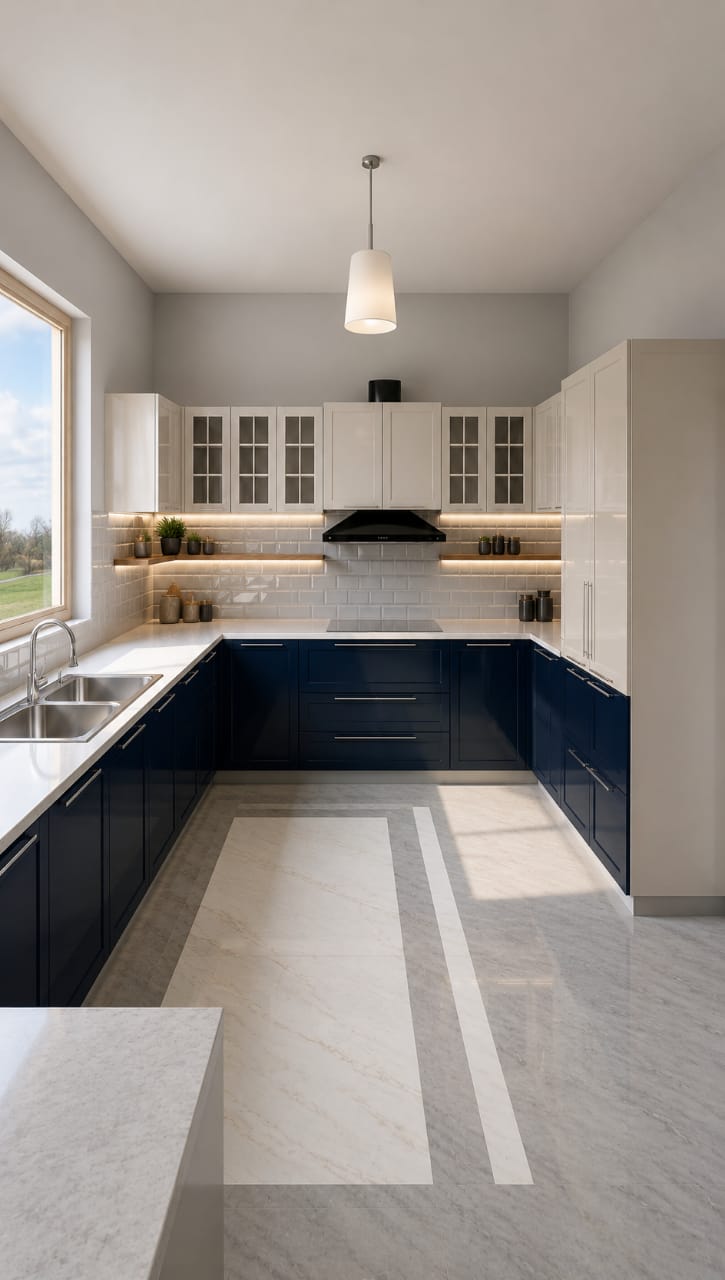
Compare quartz, granite, marble and other kitchen countertops to choose the right option for durability, maintenance, style, and Indian cooking.
When designing a modular kitchen, homeowners usually spend a lot of time choosing cabinet colors, finishes, and hardware. But one decision that deserves just as much attention is the kitchen countertop.
Your countertop is one of the hardest-working surfaces in the entire kitchen. It comes into contact with water, oil, spices, hot cookware, knives, food ingredients, and everyday cleaning. For a family that cooks regularly, the right countertop can make the kitchen easier to maintain and more comfortable to use for years.
But which countertop is actually right for your home?
Quartz, granite, marble, solid surface, porcelain or another material?
There is no single answer that works for every kitchen. The right choice depends on your cooking habits, maintenance expectations, budget, appearance, durability requirements and the overall design of your home.
If you are planning a modular kitchen in Haldwani, understanding these differences before finalising your countertop can help you make a much more informed decision.
Why Your Kitchen Countertop Matters
The countertop is not simply the surface installed over your cabinets. It becomes your main preparation area.
This is where you chop vegetables, knead dough, prepare spices, keep appliances, place hot cookware and serve food. In Indian kitchens, the countertop often experiences even more demanding use because of frequent cooking, frying, tadka, masala preparation and heavy utensils.
A good countertop should therefore provide a balance of:
-
Durability
-
Stain resistance
-
Moisture resistance
-
Ease of cleaning
-
Heat tolerance
-
Scratch resistance
-
Visual appeal
-
Practical maintenance
-
Value for money
The best material is not necessarily the most expensive one. It is the material that matches how your kitchen will actually be used.
Quartz vs Granite: What's the Difference?
Quartz Countertops
Quartz countertops are engineered surfaces made using natural quartz combined with resins and other materials.
One of their biggest advantages is consistency. They are available in a wide range of colours, patterns and finishes, including designs that resemble natural marble.
Quartz is also generally non-porous, which makes it resistant to everyday staining and relatively easy to clean.
For homeowners who want a modern, uniform appearance with low day-to-day maintenance, quartz can be an attractive option.
However, quartz should not be treated as completely heat-proof. Very hot cookware should not be placed directly on the surface for extended periods. Using trivets or heat-resistant pads is a good practice.
Granite Countertops
Granite is a natural stone, and every slab can have its own colour variations, patterns and character.
It is known for its strength and durability and can work very well in kitchens that experience heavy daily use.
Granite also handles heat better than many engineered surfaces, although using a trivet for extremely hot cookware is still a sensible habit.
Because granite is a natural stone, its porosity can vary. Depending on the specific stone, sealing may be recommended to improve resistance to staining and moisture.
For homeowners who prefer the natural appearance of stone and want a highly durable work surface, granite remains a strong choice.
So, Which Is Better: Quartz or Granite?
The answer depends on your priorities.
Choose quartz if you prioritise:
-
Consistent appearance
-
Low routine maintenance
-
Stain resistance
-
Modern and contemporary designs
-
A wide selection of colours and patterns
Consider granite if you prioritise:
-
Natural stone appearance
-
High durability
-
Strong heat performance
-
Unique slab patterns
-
A more traditional or natural aesthetic
Neither material should automatically be labelled as "better".
The better question is: Which material is better for the way you use your kitchen?
What About Marble?
Marble is one of the most visually appealing countertop materials available.
Its natural veining can give a kitchen a luxurious and timeless appearance.
However, marble is also more demanding than many homeowners realise. It is relatively porous and can be vulnerable to staining and etching from acidic substances.
Lemon juice, vinegar and other acidic ingredients can affect certain marble surfaces if they are not properly protected and maintained.
For a kitchen where heavy cooking happens every day, this matters.
If you love the appearance of marble, you can still consider it, but you should understand the maintenance involved before choosing it.
For many busy Indian kitchens, homeowners may prefer a lower-maintenance engineered surface that provides a similar visual character.
What About Solid Surface Countertops?
Solid surface materials are another option for modern kitchens.
One of their biggest advantages is design flexibility. Depending on the product, joints can be made less visually prominent, creating a clean and continuous appearance.
Solid surfaces can also be shaped and integrated into different design configurations.
However, they generally do not offer the same heat resistance as natural stone.
This makes them more suitable for homeowners who prioritise a seamless contemporary appearance and are comfortable using trivets and following the manufacturer's care recommendations.
What About Porcelain or Sintered Stone?
Porcelain and sintered stone surfaces have become increasingly popular in modern interiors.
These engineered surfaces can offer excellent resistance to heat, stains, moisture and everyday wear, depending on the specific product.
They can also replicate the appearance of natural stone and other premium materials.
However, installation quality is extremely important.
Large-format slabs can be more challenging to transport, cut and install, and the edges require careful handling.
This means choosing the material is only half the decision. The quality of fabrication and installation matters just as much.
Which Countertop Is Best for Heavy Indian Cooking?
If your kitchen is used for heavy Indian cooking, don't choose a countertop based only on its showroom appearance.
Think about your daily routine. Do you frequently:
-
Fry food?
-
Prepare tadka?
-
Use heavy pressure cookers?
-
Keep hot utensils on the counter?
-
Knead dough?
-
Prepare large quantities of food?
-
Use strong spices such as turmeric?
-
Clean the countertop several times a day?
If yes, stain resistance, durability and easy maintenance should become major priorities.
For heavy cooking, materials such as granite and suitable engineered quartz or other high-performance surfaces can be strong options, provided they are selected and installed according to their specific properties and care requirements.
The right choice will depend on the exact product rather than simply the material name.
Choosing the Best Kitchen Countertop for Your Home
Countertop Material and Kumaon Climate
For homeowners in Haldwani and the wider Kumaon region, environmental conditions should also be considered during kitchen planning.
Kitchen surfaces regularly encounter moisture from sinks, steam from cooking and temperature changes.
In homes where moisture management is already an important consideration, choosing a countertop with appropriate moisture resistance and ensuring proper installation around the sink becomes especially important.
But remember that the countertop is only one part of the system.
Water resistance also depends on:
Cabinet material + edge sealing + sink installation + plumbing + countertop installation
A premium countertop cannot compensate for poor installation or water leakage underneath it.
This is why countertop selection should be discussed together with the complete modular kitchen design.
Don't Choose a Countertop Based Only on Colour
This is one of the most common mistakes homeowners make.
A countertop may look beautiful under showroom lighting but behave differently in your actual kitchen.
Before finalising it, consider:
How visible are stains?
Very light surfaces can make some marks more noticeable.
How visible are scratches?
Certain darker or highly polished surfaces may make scratches more obvious.
How will it look with your cabinets?
The countertop should complement the cabinet finish rather than compete with it.
How much maintenance are you comfortable with?
Some natural stones require more care than engineered surfaces.
How will it look after several years?
A countertop is a long-term decision, so think beyond installation day.
Think About the Edge Profile Too
The countertop edge is a small design detail that can significantly affect the final appearance.
Depending on the material and design, you may choose a simple straight edge or a more detailed profile.
For modern modular kitchens, clean and minimal edges often create a contemporary appearance.
The edge also needs to be fabricated properly, especially around corners, cut-outs and sink areas.
Poorly finished edges can affect both appearance and long-term usability.
Sink Cut-Outs Need Special Attention
The area around the kitchen sink is one of the most exposed parts of the countertop. It experiences water almost every day.
Therefore, the sink cut-out, sealing and installation should be handled carefully.
Before finalising the countertop, confirm:
-
Sink dimensions
-
Sink type
-
Cut-out dimensions
-
Faucet location
-
Drainboard requirements, if any
-
Water drainage
-
Edge finishing
-
Sealing requirements
A beautiful countertop can still develop problems if water repeatedly reaches poorly protected edges or cabinet surfaces.
How Much Should You Spend on a Kitchen Countertop?
Budget is obviously an important factor.
However, comparing countertop prices only on a per-square-foot basis can be misleading.
The final cost can also depend on:
-
Material grade
-
Slab thickness
-
Brand or supplier
-
Edge profile
-
Cut-outs
-
Sink installation
-
Transportation
-
Fabrication
-
Installation
-
Wastage
-
Special finishing
Instead of asking only, "Which countertop is cheapest?"
Ask:
"Which countertop gives me the right combination of durability, appearance and maintenance for my budget?"
This approach can prevent both overspending and choosing a material that does not suit your lifestyle.
A Simple Countertop Comparison
| Material | Appearance | Maintenance | Heat Performance | Best For |
|---|---|---|---|---|
| Quartz | Modern & consistent | Low | Good, but protect from extreme heat | Low-maintenance modern kitchens |
| Granite | Natural & unique | Moderate | Very good | Heavy-use kitchens |
| Marble | Premium & luxurious | Higher | Good, but care is important | Aesthetic-focused kitchens |
| Solid Surface | Seamless & contemporary | Moderate | Lower than stone | Modern, seamless designs |
| Porcelain/Sintered Stone | Premium & versatile | Low | Excellent, depending on product | High-performance modern kitchens |
The table is a starting point, not a substitute for checking the exact product specifications.
Different brands and grades can perform differently even within the same material category.
7 Questions to Ask Before Finalising Your Countertop
Before you approve the countertop for your modular kitchen, ask your designer or supplier:
-
How does this material perform with heavy Indian cooking?
-
Does it require sealing or periodic maintenance?
-
How resistant is it to stains and moisture?
-
What precautions should I take with hot cookware?
-
How should the sink area be sealed?
-
What happens if the surface gets chipped or damaged?
-
What is included in the quoted price, fabrication, cut-outs and installation?
These questions can reveal important differences that are not visible in a showroom sample.
The Countertop Should Match the Entire Kitchen
Your countertop should not be selected independently.
It should work with:
-
Cabinet colour
-
Backsplash
-
Flooring
-
Wall colour
-
Appliances
-
Lighting
-
Kitchen layout
-
Cooking style
For example, a heavily patterned granite countertop may work beautifully with simple, understated cabinets.
Similarly, a subtle quartz surface can complement more detailed cabinet finishes.
The goal is balance.
Your kitchen should feel coordinated rather than as though every element was selected separately.
What Should You Choose for Your Home?
If you want a simple decision framework, start here:
Choose quartz when low maintenance, consistency and contemporary styling are your priorities.
Choose granite when you prefer natural stone, durability and strong heat performance.
Choose marble when luxury and natural character are more important than easy maintenance.
Consider solid surface when you want a clean, seamless contemporary appearance and understand its heat limitations.
Consider porcelain or sintered stone when you want a high-performance engineered surface and have access to experienced fabrication and installation.
But before making the final decision, look at your kitchen as a whole.
The best countertop is not the one that looks most expensive. It is the one that performs well in your kitchen, with your cooking habits, your maintenance routine and your budget.
Final Thoughts
Choosing a kitchen countertop is a long-term decision.
Quartz, granite, marble, solid surface and porcelain-based options all have their own strengths and limitations. Instead of choosing based on trends or showroom appearance alone, consider how the surface will perform under your actual daily routine.
For homeowners planning a modular kitchen in Haldwani, this becomes even more important. Your countertop needs to work together with the cabinets, sink, plumbing, cooking zone and overall kitchen design.
At Kitchen World, countertop selection should be treated as part of the complete kitchen planning process, not as an isolated finishing decision.
Because a good kitchen countertop should do more than make your kitchen look beautiful.
It should be ready for everything your kitchen does every day.
Tags
Written by
Kitchen World