
How to Design a Kitchen That Looks New for Year
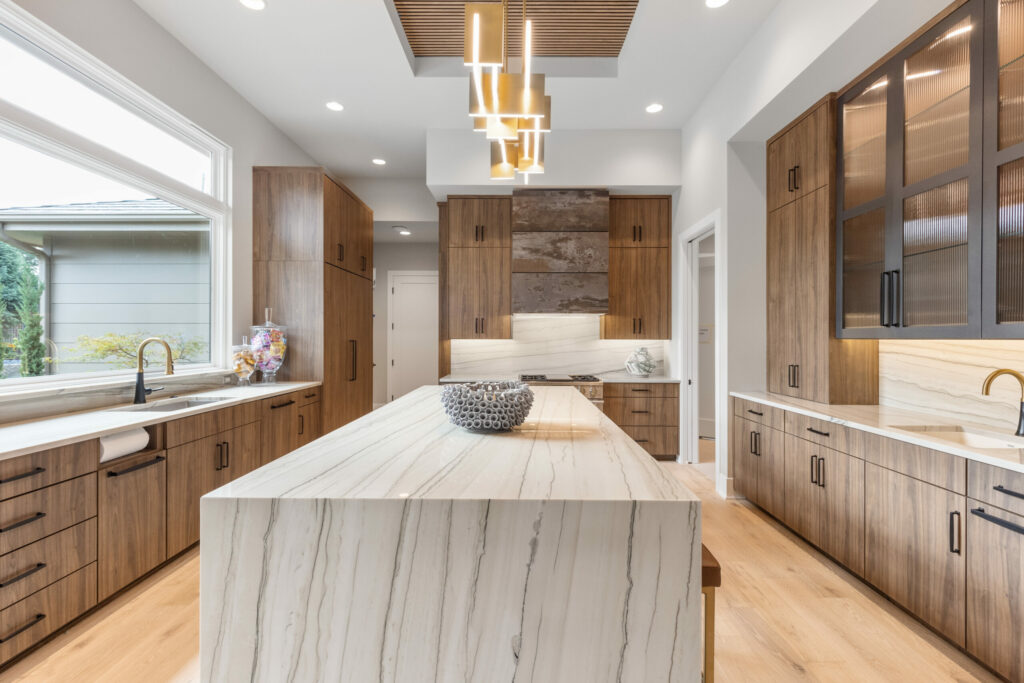
Learn how to build a modular kitchen that lasts a decade without sagging, peeling, or jamming.
When embarking on a home build or a major renovation, designing the kitchen is almost always one of the most exciting milestones. Homeowners naturally spend weeks browsing social media boards, admiring glossy finishes, selecting quartz countertop shades, and shortlisting minimalist handle profiles. When the installation team leaves and the final cabinets are wiped clean, the room looks like a pristine cover photo from an architectural magazine.
Yet a brand-new kitchen is deeply deceptive.
The true test of your kitchen’s quality never happens on the day of installation. It happens slowly over time—across thousands of cooking sessions, high-heat boils, accidental oil splashes, heavy pot drops, and daily moisture exposure.
In most standard homes, a kitchen starts showing severe wear and tear by year three or four. Cabinet doors begin to sag out of alignment, laminate edges peel back from water exposure, drawer channels jam under heavy cookware loads, and cabinet bottoms warp into unsightly, unsanitary hollows.
It does not have to be this way. A truly well-engineered modular kitchen should look, feel, and function just as smoothly on day 3,650 as it did on day one.
Building a 10-year kitchen is not a matter of luck or obsessive cleaning; it is a matter of material science, structural engineering, precision hardware selection, and moisture defense.
This comprehensive guide breaks down the core structural decisions required to build a kitchen that stands the test of time without losing its structural integrity or visual elegance.
1. The Core Foundation: Why Material Engineering Trumps Surface Beauty
The single biggest mistake homeowners make during kitchen planning is allocating 80% of their budget to visible surface finishes while accepting cheap internal cabinet box (carcass) materials.
Your cabinet doors and countertop are only as stable as the internal carcass supporting them. If the core material degrades, the entire kitchen mechanical assembly collapses from within.
The Myth of Compressed Boards in Wet Zones
Many budget-focused builders rely on compressed particleboard or standard interior-grade MDF for cabinet carcasses. Particleboard is manufactured by compressing loose sawdust with water-soluble adhesives.
In a high-humidity kitchen environment—where steam rises from boiling pots, wet dishes drip inside drainer racks, and sink plumbing occasionally leaks—compressed board acts like a rigid sponge. It absorbs ambient moisture, expands, and breaks down internally.
Once a board swells:
-
Screw-Holding Capacity Drops: Heavy door hinges pull out of the softened board, causing doors to sag and rub against each other.
-
Structural Load Failure: Heavy drawers loaded with cast-iron cookware or grain containers cause shelf boards to bow downward permanently.
-
Mold and Hygiene Hazards: Trapped moisture inside porous wood particles becomes a breeding ground for mildew and foul odors.
The Non-Negotiable Standard: Certified BWP Marine Plywood
To guarantee a 10-year lifespan, every wet-zone and load-bearing cabinet carcass must be constructed using Boiling Water Proof (BWP) Marine Grade Plywood.
Unlike particleboard or MDF, BWP marine plywood is constructed from solid hardwood veneers bonded together under extreme heat and pressure using synthetic undiluted phenol-formaldehyde resins. This structural composition ensures:
-
Zero Moisture Swelling: Even under direct water exposure or standing leaks, BWP marine plywood maintains its precise dimensional thickness.
-
Exceptional Tensile Strength: High screw-holding power keeps heavy-duty drawer slides and door hinges anchored securely for decades.
-
Termite and Borer Immunity: Chemical treatment during manufacturing makes the core completely unpalatable to wood-boring pests.
2. Edge-Banding Science: The Invisible Shield Against Water Damage
Even when high-grade plywood is used, water does not enter through the laminated flat face of a cabinet panel—it enters through the raw, exposed edges where the panel was cut to size.
In traditional carpentry or low-grade modular fabrication, edge strips are applied manually using liquid contact adhesive and cut by hand with a razor blade. Over time, heat exposure degrades this manual glue line, causing the edge tape to peel off and exposing the inner core to ambient steam.
Machine-Applied PUR Edge Sealing
A 10-year durable kitchen utilizes automated factory edge-banding with Polyurethane (PUR) hot-melt adhesives.
PUR technology creates a chemical bond rather than a simple mechanical grip. Once cured, the PUR glue line is 100% waterproof, heat-resistant up to high cooking temperatures, and virtually invisible. This seamless edge seal locks moisture out completely, preventing the edge delamination that plagues older kitchens.
3. High-Performance Finishes: Choosing Surfaces That Resist Aging
While cabinet carcasses provide structural strength, external door fronts take the brunt of daily physical impact, finger oil contact, sunlight exposure, and cleaning friction. Choosing the wrong surface finish means your kitchen will look faded and scratched long before its time.
High-Pressure Laminates (HPL) vs. Acrylic vs. PU Lacquer
| Finish Type | Scratch Resistance | UV/Color Stability | Maintenance Level | 10-Year Outlook |
| High-Pressure Laminate (1.0mm+) | Exceptional | High | Very Easy | Maintains original texture and color effortlessly. |
| Anti-Fingerprint Matte Acrylic | Moderate-High | Excellent | Easy (Wipe with microfiber) | Provides a soft-touch luxury look without oil smudges. |
| High-Gloss Polyurethane (PU) | Sensitive to sharp objects | Excellent | Medium | Ultra-luxurious mirror finish; requires careful cleaning. |
For maximum longevity in high-traffic family kitchens, 1.0mm thick High-Pressure Laminate (HPL) or Anti-Fingerprint Thermal Acrylics offer the best combination of impact toughness, color stability, and effortless daily maintenance.
4. Hardware Selection: The Moving Parts That Define Daily Quality
A kitchen is a heavy-duty mechanical system opened and closed tens of thousands of times over a decade. The moving hardware—hinges, drawer runners, lift-up stays, and corner pull-outs—determines whether your kitchen feels smooth or frustrating to operate as the years go by.
Why Cheap Hinges Fail First
Inexpensive door hinges use thin steel stampings and low-grade hydraulic dampers. Within two years, the hydraulic fluid leaks out, losing soft-closing capability and causing doors to slam loudly against cabinet frames.
Investing in German-Engineered Mechanical Systems
To build a kitchen that lasts a decade, insist on certified hardware systems from world-class manufacturers (such as Blum, Hettich, or Grass).
-
Tested for 200,000 Cycles: Premium soft-close hinges are lab-tested to open and close 200,000 times—representing over 15 years of aggressive household use.
-
Full-Extension High-Load Runners: Heavy-duty tandem drawer slides are rated for $30\text{ kg}$ to $70\text{ kg}$ continuous dynamic load capacity. Even when fully loaded with heavy pots, they glide effortlessly on synchronized roller tracks.
-
Tool-Free 3D Adjustment: Premium hinges feature 3D adjustment screws inside the hinge arm. If a door ever shifts slightly over time, a simple turn of a screwdriver brings it back into perfect spatial alignment in seconds.
Design Tip: A durable kitchen must also be an ergonomically sound kitchen. Poor spatial planning and disorganized layout choices cause unnecessary wear and tear on cabinet hardware. To learn how improper work triangles and bad utility mapping shorten your kitchen's lifespan, read our complete layout analysis. Read More Blog: The Real Reason Your Big Kitchen Still Lacks Storage Space
5. Countertop and Backsplash Longevity: The Working Surface
The kitchen countertop endures the harshest treatment in the entire home—direct knife contact, scorching hot cookware placement, citrus acid spills, and turmeric oil splashes.
Quartz vs. Granite: The 10-Year Surface Battle
-
Natural Granite: Exceptionally heat-resistant and tough, but natural granite is porous. It requires periodic chemical sealing to prevent oil stains and acidic etching from vinegar or lemons.
-
Engineered Quartz: Composed of ~93% natural quartz crystals bound with stain-resistant polymer resins. Engineered quartz is non-porous, highly stain-immune, and requires zero sealing—making it one of the most durable choices for long-term aesthetic beauty.
The 10-Year Kitchen Engineering Checklist
Before finalizing your modular kitchen specifications or issuing a manufacturing deposit, audit your materials against this durability standard:
-
Certified Core: Are all wet-zone and lower base cabinet carcasses specified in certified Boiling Water Proof (BWP) Marine Plywood?
-
Automated Edge Sealing: Are all panel edges sealed using factory-applied PUR hot-melt edge-banding to block moisture entry?
-
Tested Motion Hardware: Are all hinges and drawer slides sourced from certified international brands offering 100,000+ cycle durability ratings?
-
Stain-Immune Countertop: Is your countertop material non-porous and resistant to deep turmeric, coffee, and acid staining?
-
Sufficient Structural Load Capacity: Are heavy-item drawers rated for at least 50 kg dynamic load weight?
By prioritizing core material density, precision edge technology, and certified mechanical hardware, you invest in a kitchen that maintains its structural beauty and effortless operation for a decade and beyond.
🔴 CALCULATE YOUR 10-YEAR DURABLE KITCHEN INVESTMENT
Planning a new modular kitchen build or full renovation in Haldwani or the Kumaon region? Use our interactive online estimator to calculate exact material specifications, hardware options, and overall layout costs tailored specifically to your home footprint.
-
Call / WhatsApp: +91 8979123945
-
Visit Our Design Studio: Kaladhungi Road, Haldwani, Uttarakhand
-
Try Our Instant Online Budget Tool: Cost Calculator
Tags
Written by
Kitchen World