
Open Kitchen or Closed Kitchen: Which One Is Better for Indian Families?
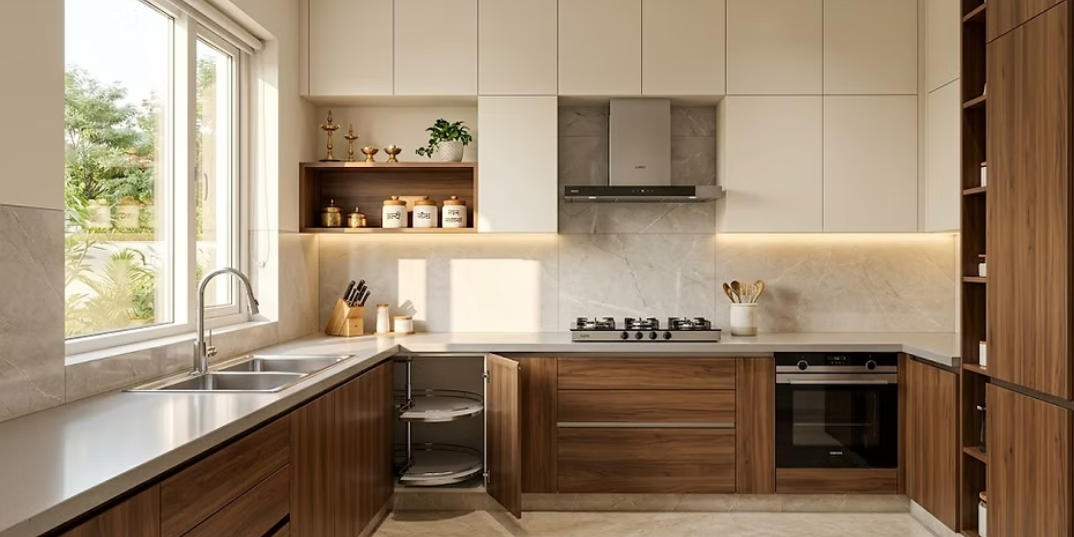
Discover whether an open or closed kitchen layout fits your home. Learn how both styles handle traditional Indian cooking, ventilation, and space management.
When embarking on a home construction journey or executing a premium residential renovation, selecting the fundamental architectural style of your cooking zone is one of the most critical decisions you will make. Long before you begin exploring material engineering catalogs, testing soft-close tandem drawers, or selecting low-porosity engineered countertops, you must address a core layout question that shapes the daily flow of your entire household: Should you build an open kitchen or a closed kitchen?
For generations, the traditional Indian kitchen was built as a strictly closed, isolated room located at the back of the house. This layout was intentionally designed to keep intense cooking smoke, heavy spice vapors, and unwashed prep utensils hidden away from living and dining spaces.
However, as modern architecture moves toward open-concept floor plans, compact builder apartments, and shared family spaces, the Western-inspired open kitchen has become highly popular.
Modern families often fall in love with the visual presentation of open kitchens showcased in design magazines, visualizing a bright, social space where the cook can easily chat with guests sitting in the living room.
Yet, applying an architectural trend directly to an Indian household without evaluating daily cooking habits can lead to functional challenges. Indian culinary traditions involve heavy frying, deep seasoning (tadka), extended preparation times, and the use of large, specialized utensils.
If your layout choice is based entirely on aesthetics rather than your family's actual routine, you can run into everyday issues—such as strong spice odors settling into living room fabrics, or finding your social zone exposed to cooking noise and messy countertops.
Choosing the right style requires a balanced look at the structural, functional, and cultural factors that define both open and closed kitchen systems. This comprehensive guide provides an in-depth analysis of both layouts, breaks down how they handle the demands of Indian cooking, and outlines how to select the perfect model for your home.
1. The Open Kitchen Layout: Social Integration and Spatial Freedom
An open kitchen is designed without partition walls, flowing seamlessly into the adjacent dining room, living area, or lounge space.
The Power of Visual Expansion
The most immediate benefit of an open layout is its ability to maximize the feeling of space in a home. By removing structural walls, you allow natural light from living room windows to flood into the cooking zone, making even a small floor plan feel bright, spacious, and airy.
Enhancing Family Connection and Social Flow
-
Inclusive Cooking Experiences: In a traditional closed kitchen, the person preparing the meal is often isolated from the rest of the household. An open layout removes this barrier, allowing the cook to watch television, monitor children doing homework at the dining table, or chat with guests while working.
-
Modern Entertainment Spaces: This configuration naturally converts the kitchen into a social hub. With the addition of a raised breakfast counter or an island unit with bar stools, family and friends can gather around the workspace without crowding the prep zones.
The Functional Challenges of an Open Concept
While open kitchens offer excellent spatial freedom, they demand continuous maintenance and careful behavioral habits:
-
The Exposure of Visual Clutter: In an open layout, your active preparation surfaces, unwashed utensils, and appliance setups are completely visible from the living room. If you have a busy cooking routine, maintaining a spotless look can require constant effort.
-
The Noise Factor: The sounds of daily food preparation—such as the high-speed blending of mixers, the loud whistle of pressure cookers, and the scraping of heavy cookware—travel freely into your relaxation areas, potentially disrupting family members reading or working nearby.
2. The Closed Kitchen Layout: The Functional Chef's Sanctuary
A closed kitchen is a traditional, self-contained room bounded by four structural walls and accessed through a dedicated doorway or sliding panel.
Containing Heavy Cooking Elements
The greatest strength of a closed kitchen is its ability to isolate the intense physical elements of traditional Indian cooking.
-
Odoring and Grease Control: Preparing meals that involve deep-frying or rich seasoning releases heavy, oil-laden vapors and intense aromas. A closed room confines these particles to a single space, preventing grease from settling onto premium living room upholstery, curtains, or delicate electronic systems.
-
Total Privacy for Preparation: A closed layout provides absolute privacy. You can leave unwashed serving platters or raw prep items on the counter to clean later without worrying about unexpected guests seeing the mess, keeping your social areas neat and orderly.
Optimizing Storage Volumes
Because a closed kitchen features four full walls, it offers significantly more vertical surface area for mounting upper wall cabinets, full-height lofts, and deep pantry towers. This abundance of wall space makes it much easier to organize a large collection of specialized cookware, grain containers, and small appliances.
The Limitations of Separation
-
Reduced Air Circulation: Without proper engineering, enclosed kitchens can become hot and stuffy during intensive cooking, especially during warm summer months.
-
Isolated Workflows: The cook remains physically separated from the social life of the home, which can make long preparation routines feel lonely and disconnected.
3. Structural Synchronization: Coordinating Utilities and Layout Blueprints
Whether you choose an open or a closed layout, executing your physical build requires precise technical planning during the architectural phase. Many homeowners make the mistake of choosing a kitchen layout style without first checking their home's core plumbing lines, heavy-power electrical points, and structural support pillars.
If civil utility paths are laid out using generic guesswork before your modular cabinet engineering is finalized, you can run into major structural conflicts.
For instance, you might find that your open kitchen breakfast counter cannot be installed because a main plumbing stack or a solid load-bearing column was placed right in the middle of your open floor plan, forcing you into expensive structural alterations.
Achieving a flawless layout requires a systematic approach where structural elements, gas points, and cabinetry configurations are completely synchronized on a digital blueprint before any civil work begins on site.
Design Tip: To learn how premature civil construction leads to expensive layout conflicts, and how to avoid critical blueprint mistakes during your build, explore our detailed construction analysis. Read More Blog: The Biggest Mistakes People Make While Building a New Kitchen
4. The Engineering Essentials for a High-Performance Open Kitchen
If your heart is set on the modern aesthetic of an open kitchen, you can successfully manage the challenges of smoke, noise, and clutter by investing in high-performance structural systems:
1. High-Suction, Low-Noise Extraction Chimneys
A standard exhaust fan is completely inadequate for an open layout. You need a premium, high-suction chimney with an extraction capacity of at least 1200 to 1500 cubic meters per hour ($m^3/h$).
Look for models utilizing filterless technology and brushless DC (BLDC) motors, which provide powerful suction while operating quietly, ensuring smoke is removed without disrupting conversations in the living room. Keep the exhaust pipe run as short and straight as possible to maximize extraction efficiency.
2. Upgrading to Sound-Dampening Mechanical Systems
To minimize the sound of cabinet doors and drawers slamming shut across an open floor plan, your storage units must be equipped with premium motion-control hardware. Using high-capacity under-mount tandem boxes and certified soft-close hinges absorbs physical energy quietly, maintaining a peaceful home environment.
3. Incorporating Hideaway Storage Zones
Keep your open counters clear by designing dedicated appliance garages with vertical rolling shutters and internal power plugs. This allows you to use and store tools like mixers and air fryers right where they live, providing instant visual order with a simple pull of the shutter.
5. The Hybrid Kitchen: The Best of Both Worlds
For families torn between the bright look of an open layout and the practical functionality of a closed sanctuary, the Hybrid Kitchen provides an ideal modern solution.
Glass Partitioning and Sliding Glass Frameworks
A hybrid layout replaces solid interior brick walls with large, floor-to-ceiling clear glass partitions or sliding multi-panel glass doors framed in minimal aluminum profiles.
-
The Open Feel: When the glass panels are slid open, the kitchen connects seamlessly with your dining area, creating a spacious, interactive environment for social gatherings.
-
The Closed Function: When preparing dishes that involve intense seasoning or noisy blending, simply slide the glass doors shut. This completely blocks smoke, grease, and noise while allowing natural light to flow across the rooms, giving you the benefits of both styles without the drawbacks of either.
Making Your Decision: A Tailored Evaluation Blueprint
To determine which layout system fits your family best, take a moment to evaluate your household's daily lifestyle across these four core categories:
| Assessment Factor | Choose an Open Kitchen If... | Choose a Closed Kitchen If... |
| Cooking Styles | Your daily meals involve baking, light cooking, continental dishes, or minimal deep seasoning. | Your routine features deep-frying, daily tadkas, and intensive multi-course Indian meals. |
| Maintenance Habits | You practice clean-as-you-go cooking and prefer keeping countertops completely clear of items. | You prefer washing dishes at the end of the day and want to keep raw prep work out of sight. |
| Household Dynamics | You love entertaining guests while cooking and want to stay connected with family life. | You consider cooking a focused task and prefer a quiet, dedicated space without distractions. |
| Space Parameters | You are designing a compact apartment or builder floor where maximizing light and space is key. | You have a large, independent home layout with ample room for dedicated functional zones. |
The Strategic Path from Concept to Flawless Execution
Choosing between an open, closed, or hybrid layout is just the starting point of building a successful workspace. Turning that conceptual choice into a durable reality requires a structured design approach where material durability, ergonomic clearances, and user habits are carefully calculated.
Every home has unique structural parameters, and every family follows a distinct daily routine.
To ensure your investment delivers lasting comfort, your kitchen should be designed around your specific habits, utilizing a systematic process that maps out your workflow before manufacturing begins.
Design Tip: To discover how our team analyzes your family's cooking habits, maps out custom spatial flows, and executes precision modular installations, read about our specialized layout process. Read More: How We Plan
Master Layout Selection Summary Checklist
Before finalizing your structural architectural drawings or approving an interior production blueprint, ensure your design team confirms these five layout essentials:
-
Cooking Style Alignment: Choose a closed or hybrid glass layout if your family prepares traditional, highly aromatic Indian meals daily to contain grease.
-
High-Capacity Suction Planning: Ensure an open layout includes a 1200+ $m^3/h$ chimney with a direct, short exhaust pipe run to prevent lingering odors.
-
Sound Control Engineering: Verify that all open-concept cabinetry uses soft-close hinges and under-mount tandem drawers to minimize household noise.
-
Countertop Clutter Management: Incorporate dedicated appliance garages and hideaway storage units in open designs to keep your primary counters clear.
-
Vertical Space Optimization: Maximize structural wall spaces with full-height lofts and pantry towers in closed layouts to capture every inch of storage volume.
By grounding your layout decision in your family's actual cooking habits, and backing it up with proper ventilation and motion-control hardware, you can build a beautiful, high-performing kitchen that supports your daily routine for decades to come.
🔴 REQUEST A PROFESSIONAL KITCHEN LAYOUT AUDIT
Unsure whether an open, closed, or hybrid kitchen layout is right for your upcoming home build? Bring your architectural floor plans to our design center for a complete, 3D space-planning evaluation with our engineering team.
-
Call / WhatsApp: +91 8979123945
-
Visit Our State-of-the-Art Showroom: Kaladhungi Road, Haldwani, Uttarakhand
-
Explore Engineered Designs: www.kitchenworldhaldwani.com
Tags
Written by
Kitchen World