95% of Kitchens in Kumaon Get Damaged Faster. Here Is Why Smart Modular Design Matters
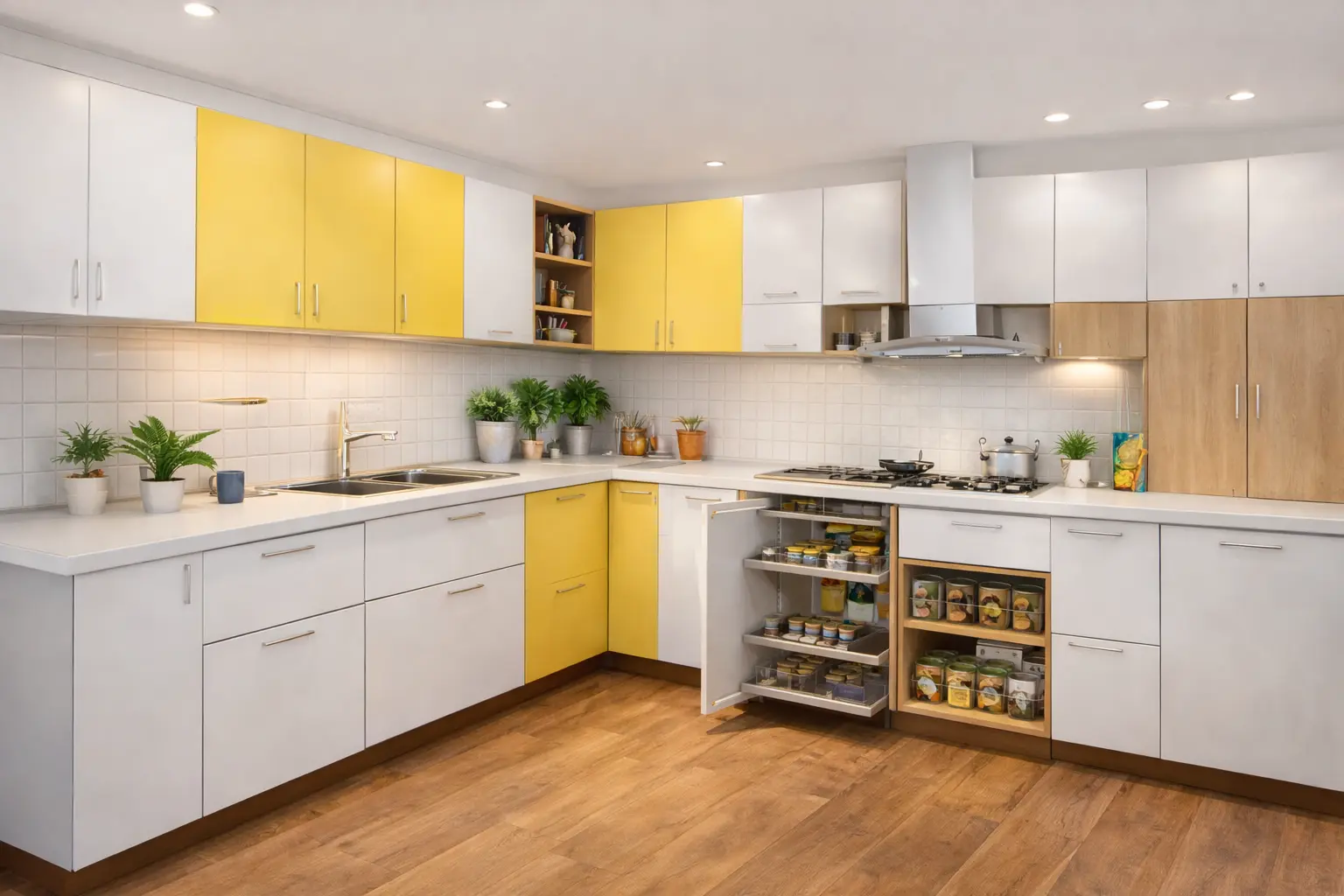
Many kitchens in Kumaon get damaged early due to moisture, hard water, and poor design. Learn how smart modular kitchens can solve these issues.
In many homes across Kumaon, the kitchen is the heart of the house. It is where morning tea begins the day, where families gather during festivals, and where daily meals are prepared with care. But there is a quiet problem that many homeowners notice only after a few years.
Cabinets begin to swell. Hinges start rusting. Drawers stop closing properly. The shiny kitchen that once looked perfect slowly begins to show signs of damage.
Many homeowners think this is normal wear and tear. But in reality, the problem is much deeper.
Across towns like Haldwani, Bhimtal, Nainital, and other parts of Kumaon, a large number of kitchens face early damage because they are built using designs and materials that do not suit the local climate and conditions.
In fact, if you look closely at homes in the region, you will notice a common pattern.
Most kitchens are not failing because homeowners use them heavily. They fail because they were never designed for the environment they exist in.
This is where smart modular kitchen design changes everything.
Why Kitchens in Kumaon Face Faster Damage
Kumaon has a unique environment compared to many other parts of India. The combination of mountain climate, moisture levels, and water quality affects how materials behave inside a kitchen.
Traditional kitchen construction often ignores these conditions.
Below are some of the most common reasons why kitchens in the region deteriorate faster.
1. High Moisture and Cold Climate
The climate in many parts of Kumaon includes long winters, foggy mornings, and fluctuating humidity levels.
These conditions can quietly damage kitchen materials.
Common Effects
-
Cabinets absorb moisture and begin to swell
-
Laminates start peeling from edges
-
Wood panels lose their strength
-
Corners begin to crack over time
Materials that perform well in dry cities often fail quickly in mountain environments.
A kitchen designed without considering moisture protection is almost guaranteed to develop issues within a few years.
2. Hard Water That Rusts Hardware
Another issue many homeowners face in the region is hard water.
Hard water contains minerals that slowly damage metal parts inside the kitchen.
What Happens Over Time
-
Hinges begin to rust
-
Drawer channels stop sliding smoothly
-
Screws and fittings weaken
-
Stainless steel accessories lose shine
Many people blame poor quality hardware. In reality, the hardware simply was not selected for the local water conditions.
3. Uneven Walls and Sloping Floors
Homes in hilly regions often have structural variations.
Walls may not be perfectly straight, and floors can have small slopes.
Traditional carpentry kitchens are usually built assuming perfect alignment.
When that assumption fails, problems start appearing.
Common Issues
-
Cabinets do not align properly
-
Doors remain slightly tilted
-
Drawers start rubbing against panels
-
Storage space becomes inefficient
Over time these small alignment problems turn into major functionality issues.
4. Poor Ventilation and Smoke Build Up
Many kitchens in older homes across the Kumaon region still rely on limited ventilation.
Cooking fumes, steam, and oil particles accumulate inside the kitchen.
Effects on Kitchen Surfaces
-
Cabinets turn greasy
-
Laminates discolor
-
Walls develop stains
-
Wooden panels absorb odor
Without proper airflow, kitchen materials age much faster than expected.
5. Traditional Carpentry Limitations
Many homeowners still choose traditional carpentry kitchens because they appear affordable at first.
But these kitchens often lack precision and modern protection features.
Limitations of Traditional Kitchens
-
No moisture resistant panels
-
Inconsistent measurements
-
Basic hinges and hardware
-
Limited storage innovation
While they may look good initially, they rarely provide long term durability.
Signs Your Kitchen May Already Be Facing These Problems
Sometimes the damage begins slowly and is easy to ignore. But certain signs indicate that the kitchen is struggling against the environment.
Look out for these warning signals.
Early Warning Signs
-
Cabinet doors no longer close smoothly
-
Edges of panels start swelling
-
Hinges develop rust marks
-
Drawers feel heavy or stuck
-
Laminates start peeling
If you notice two or more of these issues, your kitchen may already be experiencing structural stress.
Traditional Kitchen vs Smart Modular Kitchen
A well designed modular kitchen solves many of these problems by combining precision manufacturing with materials suited for the environment.
Below is a simple comparison.
| Feature | Traditional Kitchen | Smart Modular Kitchen |
|---|---|---|
| Material durability | Often standard plywood | Moisture resistant engineered boards |
| Installation | On site carpentry | Factory precision modules |
| Hardware quality | Basic hinges | Rust resistant premium hardware |
| Alignment | Depends on carpenter skill | Laser measured fitting |
| Maintenance | Frequent repairs | Long term durability |
| Storage design | Basic shelves | Optimized smart storage |
This difference becomes especially important in regions where climate and structural variations affect material performance.
How Smart Modular Kitchens Adapt to Local Conditions
Modern modular kitchens are not just about aesthetics.
They are designed to adapt to real world conditions and daily usage patterns.
Here are some ways they address the problems common in Kumaon homes.
Moisture Resistant Materials
High quality modular kitchens use engineered boards and treated materials designed to resist humidity.
These materials prevent swelling and maintain structural integrity for years.
Rust Resistant Hardware
Premium modular systems include hardware designed for durability.
Examples include
-
Anti rust hinges
-
Soft close drawer channels
-
Stainless steel accessories
-
Corrosion resistant fittings
These components continue working smoothly even in humid environments.
Precision Installation
Modular kitchens are designed using accurate measurements and installed with precision.
This ensures
-
Perfect cabinet alignment
-
Smooth door movement
-
Efficient space utilization
Even in homes with uneven walls, proper planning allows adjustments that maintain functionality.
Better Ventilation Integration
Modern kitchen layouts often include proper space for chimneys and airflow planning.
This reduces grease accumulation and keeps cabinets cleaner for longer.
A Real Life Situation Many Homeowners Experience
Imagine this scenario.
A family in Haldwani installs a beautiful wooden kitchen through a local carpenter. It looks great during the first year.
By the second year, the cabinet below the sink begins swelling slightly.
In the third year, hinges start rusting and drawers stop sliding properly.
By the fourth year, repairs begin costing more than expected.
This story is extremely common across Kumaon homes.
But it does not have to be this way.
A kitchen built with the right materials, proper planning, and climate aware design can remain functional and beautiful for many years.
Why Kitchen Planning Matters More Than Most People Realize
Many homeowners focus only on appearance when planning their kitchen.
They choose colors, finishes, and cabinet styles.
But the real strength of a kitchen lies in what cannot be easily seen.
This includes
-
structural materials
-
hardware quality
-
installation precision
-
environmental compatibility
When these factors are ignored, problems appear later.
When they are addressed from the beginning, the kitchen becomes a long lasting investment.
How Kitchen World Solves These Problems
At Kitchen World Haldwani, the focus is not just on designing beautiful kitchens but on creating solutions that actually work for homes in the Kumaon region.
The team understands that kitchens here face challenges different from those in big metro cities.
That is why the approach combines design, durability, and local expertise.
What Makes Their Approach Different
1. Climate Friendly Material Selection
Materials are chosen keeping in mind moisture levels and long term durability.
This helps prevent swelling, peeling, and structural damage.
2. Premium Rust Resistant Hardware
High quality hinges, drawer systems, and fittings are used to ensure smooth functionality even in humid environments.
3. Customized Layout Planning
Every home is different. Proper measurements and planning help create kitchens that fit perfectly, even in houses with uneven walls or structural variations.
4. Smart Storage Solutions
The designs focus on maximizing usable space while keeping the kitchen organized and efficient.
5. Professional Installation
Careful installation ensures that cabinets align correctly and operate smoothly from day one.
The Bigger Idea Behind a Smart Kitchen
A kitchen should not just look beautiful on the day it is installed.
It should continue to function smoothly years later.
When homeowners understand the environmental challenges of the Kumaon region and choose solutions designed for those conditions, they avoid the cycle of repeated repairs and early damage.
The right kitchen design saves time, money, and frustration in the long run.
And most importantly, it allows the kitchen to remain what it truly should be.
The most comfortable and functional space in the home.
Tags
Written by
Kitchen World