
The Ultimate Guide to Maintaining High‑Gloss Acrylic Kitchens in Haldwani: Myths, Scratches & Expert Care Tips
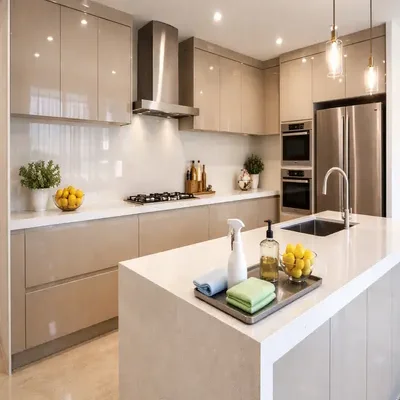
Worried about scratches on your acrylic kitchen? Learn real maintenance myths, safe cleaning tips, and scratch‑prevention secrets for Haldwani & Kumaon homes.
The Ultimate Guide to Maintaining High-Gloss Acrylic Kitchens: Myths, Realities, and Scratch-Prevention Secrets
Introduction: The Acrylic Dream vs. The Maintenance Anxiety
In the rapidly developing residential landscape of Haldwani—from the sleek modern apartments in Mukhani to the luxury villas overlooking the hills in Bhimtal—one design trend stands above the rest: High-Gloss Acrylic Kitchens. They are visually stunning, offer a mirror-like finish, and instantly elevate the aesthetic value of any home.
However, as many homeowners in the Kumaon region have discovered through online forums and community discussions, owning an Acrylic kitchen comes with a specific set of anxieties. The most common fear? Scratches. If you are a homeowner in Haldwani considering this finish, or if you already have one and are worried about its longevity, this guide is for you. We will strip away the marketing fluff and look at the hard realities of maintaining these premium surfaces in our local environment.
1. Why Acrylic is the #1 Choice for the Kumaon Climate
Before discussing maintenance, we must understand why Acrylic is a top choice for the Uttarakhand climate. Unlike traditional wood or low-grade laminates, Acrylic is a synthetic material that is naturally moisture-resistant. In areas like Nainital or Bhowali, where dampness (seelan) is a common issue during the monsoons, Acrylic doesn't swell or warp easily.
Its non-porous surface means it doesn't harbor mold or bacteria, making it a hygienic choice for Indian cooking. But its greatest strength—its perfectly smooth, reflective surface—is also what makes it vulnerable to visible wear if not handled with the right expertise.
2. Debunking the "Reddit Disasters": Why Most People Fail
In your research, you may have seen dozens of users on platforms like Reddit complaining about "swirl marks" or a "hazy" look on their shutters within months of installation. When we analyze these cases, the culprit is almost never the material itself; it is the cleaning tool.
KITCHEN WORLD BLOG
Most Indian households rely on the classic green or yellow scrubbing pads used for dishes. On a microscopic level, these pads are made of abrasive fibers designed to scrape off burnt food from metal. When used on Acrylic, they act like sandpaper. Even a single wipe with an abrasive pad can create thousands of micro-scratches that kill the gloss forever.
The Kitchen World Insight: Many homeowners blame the quality of the Acrylic when they see these marks. But the truth is, even the most expensive premium Acrylic cannot withstand a nylon scrubber. This is why we educate our clients to treat their kitchen shutters like the exterior of a luxury car—with soft tools and gentle pressure.
3. The "Haldwani Factor": Dust and Hard Water Challenges
Every city has its unique environmental challenges. For a kitchen in Haldwani, we face two main enemies that standard "global" maintenance guides don't mention:
A. Construction Dust (The Silent Abrasive)
Haldwani is a city in transition. Constant road work and construction mean fine dust particles are always in the air. These particles are essentially tiny fragments of stone and silica. If you take a dry cloth and wipe a dusty shutter, you are dragging these "tiny stones" across the surface. This friction is the primary cause of the "cloudy" look people complain about online.
B. Hard Water Deposits
The groundwater in many parts of the Terai and Kumaon region is rich in minerals. When water splashes on your kitchen shutters and dries naturally, it leaves behind white mineral spots. If you try to "scratch" these spots off with your fingernail or a hard object, you risk damaging the finish permanently.
4. A Professional’s Blueprint for Scratch-Free Maintenance
At Kitchen World Haldwani, we believe that a kitchen should be easy to live with. Follow this tiered maintenance schedule to keep your kitchen looking brand new for decades.
Phase 1: The Daily Wipe-Down (The Right Way)
The secret to a long-lasting gloss is consistency and the right fabric.
• The Tool: Only use high-GSM (grams per square meter) Microfiber cloths. They are designed to "lift" dirt rather than push it around.
• The Technique: Dampen the cloth slightly with plain water. Wipe in a long, singular motion rather than a circular scrub. Circular motions are more likely to create visible swirl marks if there is any grit trapped on the cloth.
Phase 2: Degreasing (The Weekly Deep Clean)
Indian cooking involves high-heat frying, which creates a fine mist of oil. This oil settles on the shutters and becomes "tacky," attracting more dust.
• The Solution: Use a mild, pH-neutral liquid soap (like a diluted drop of dish soap).
KITCHEN WORLD BLOG
• The Warning: Avoid cleaners containing Ammonia or Bleach. Many "glass cleaners" sold in local markets contain harsh chemicals that can cause the Acrylic to turn yellow or look "cloudy" over time.
Phase 3: The Protective Buff (Monthly)
Think of your kitchen cabinets like the clear coat of a luxury vehicle.
• The Secret: Use a specialized Acrylic Polishing Cream or a high-quality carnauba wax every few months. This fills in microscopic imperfections and creates a "slick" surface. Dust literally slides off it, and it adds an extra layer of protection against minor bumps.
5. Myth-Busting: Can You Really Cook "Indian" in a White Kitchen?
A common myth is that "Indian cooking is too messy for White Acrylic." This is simply not true. Because Acrylic is non-porous, a turmeric (Haldi) stain cannot penetrate the surface. It sits on top.
The Professional Fix
If you get a yellow stain, don't panic or scrub hard. Make a paste of baking soda and water, let it sit on the stain for 5 minutes, and wipe it away. The stain will disappear without any aggressive scrubbing that could cause scratches.
6. Why Quality at the Source Matters (The Kitchen World Difference)
Not all Acrylic is created equal. Many local workshops in the Kumaon region use 1mm "liners" that are hand-pasted using heat-sensitive glues. These are highly prone to scratching and peeling at the edges.
At Kitchen World Haldwani, we use 6th Generation Anti-Scratch Acrylic. Our sheets are factory-bonded under high pressure. This material has a "hard-coat" finish that is specifically engineered to resist the minor abrasions that occur during daily use. By investing in higher-grade material initially, you reduce the maintenance burden by 70%.
7. Frequently Asked Questions (Haldwani Local Context)
Q1: How long does it take for Kitchen World to install an Acrylic kitchen?
Ans: After the 3D design is finalized, our factory-to-home process usually takes between 15 to 21 days. We ensure a clean, on-site installation with minimal disturbance to your home.
Q2: Is Acrylic more expensive than Laminate?
Ans: Yes, Acrylic is a premium material and costs more than standard laminates. However, its longevity, moisture resistance in Kumaon’s climate, and high resale value for your property make it a smarter long-term investment.
Q3: Can deep scratches be repaired?
Ans: If the scratch is deep enough to feel with your fingernail, it may be permanent. However, most surface scratches can be professionally buffed out using an electric polisher and the right compound—a service we can provide to our clients.
Q4: Will the color fade in Haldwani’s summer heat?
Ans: No. Our premium Acrylic is UV-stable. Even if your kitchen gets direct sunlight through a window, the color will remain vibrant and won't turn yellow.
Q5: Is hardware warranty included with the installation?
Ans: Absolutely. We use branded, rust-free hardware (SS 304) from Hettich and Hafele, which comes with a comprehensive warranty, ensuring your kitchen functions as well as it looks.
8. Conclusion: Elegance Without the Effort
Is a High-Gloss Acrylic kitchen practical for a home in Haldwani? Yes, absolutely. But it requires a shift in mindset. You cannot treat a premium modular kitchen like a traditional "mistry-made" wooden cabinet.
If you commit to using the right tools—specifically microfiber cloths and mild cleaners—and avoid the "green scrubber trap," your kitchen will remain the most beautiful part of your home for the next 15 years.
Stop Guessing, Start Designing. If you are still confused about which finish is right for your budget and lifestyle, visit the Kitchen World Showroom in Haldwani. We don't just sell cabinets; we help you build a space that works for you.
Tags
Written by
Kitchen World Haldwani